Saturday, June 25, 2011


Public Versus Private? Or, Workers Versus Plutocrats
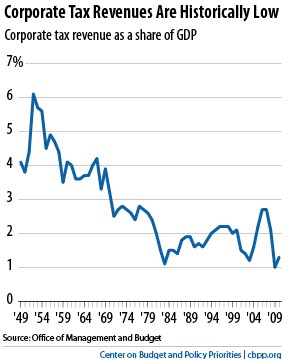
Corporate Profits are at historic levels. Yet, many corporations pay an effective tax rate of zero.


Although profits are up, workers are not sharing in the bounty of their productivity. Unemployment still remains near double digits.


Executives are pulling in ludicrous pay, especially when compared to everyday workers.


Public sector workers total compensation as a share of state expenditures has declined over time. Workers, whether public or private, have been sacrificing. As their stagnating compensation clearly shows.


Public workers are highly educated. Nearly 60%, versus 30% for the private sector.

And, when actually compared for education and experience, public workers earn less. By bashing public workers, we are allowing the private sector to push down wages for all workers.


Productivity - output per unit of input - has climbed steadily. Workers are doing more. But they are not being rewarded. Compensation in the private and public sector has stagnated.
 In every educational-attainment category, Wisconsin public workers earn less than their private sector counterparts.
 The "it's the government and public workers fault" diversion we've witnessed over the past few years has been an elaborate mirage perpetrated by the creditors and financiers who've absconded so much of our nation's wealth over the past few decades.
 This is a classic from the conservative playbook - keeping Democrats fighting amongst themselves (public v private worker), while also delivering blows to the foundation of democratic policies and politics (unions). What do you know, everyone forgets that the uber rich are robbing us all blind. And now we're getting policies that are destroying our government and its institutions that help the majority of citizens. Instead, we're giving corporate tax breaks, downsizing regulatory agencies, privatizing our public educational system, and selling off public goods and services.
For those who still haven't heard, supply-side economics is a failure. Tax breaks do not pay for themselves. Raising taxes on the rich by 2% will not trigger Armageddon. The tax-cutting frenzy (specifically for the wealthy) over the past 40 years is the reason for our deficits and crumbling infrastructure. We don't have a spending problem, we have a revenue problem.
If we're looking for ways to fund the programs we all appreciate and the infrastructure we all depend on regularly, maybe we should be going where the money is - the CEOs and their corporations.
Sunday, June 19, 2011
Milwaukee Architecture
The National Trust For Historic Preservation has listed Milwaukee's Soldiers Home on the 2011 list of most endangered historic places. The campus hosts two renowned Milwaukee architects' designs. H.C. Koch and Edward Townsend Mix.
The V.A Hospital was designed by H.C. Koch & Co. in Italianate style in 1879.

H.C. Koch and Edward Townsend Mix, together, designed the Ward Memorial Hall in the Gothic Revival style in 1881.

The main building built in 1869 was designed by Edward Townsend Mix in the Second Empire style.


For Further Reading:
Friday, June 17, 2011
The Plutocrats March On

Workers' share of national income at "its lowest level since the Bureau of Labor Statistics began keeping track of it in 1947."

Our decades-long trend of increasing inequality resumes it march.
But our problems are the fault of the government, it's entitlement programs, and those high-rolling public workers. Give me a break!
Skills Shortage Sham
Structural unemployment - a location mismatch between market demand and skilled workers - is a favorite talking-point of the capitalist, business, conservative cabal. As some direly refer to it, the skills crisis.
With 1 job opening for every 4 unemployed, laborers are hardly in a bargaining position. Most workers, especially is this economy, will take any job they can get. And, if one has a highly-demanded skill during an economic downturn, it stands to reason that he/she would command an appropriate wage in the marketplace. The idea of structural unemployment fails rudimentary logic (as an explanation for the majority of our unemployment).
Enter Scott Walker.
This structural unemployment myth allows corporations to keep taxes and regulations at bay. It allows them to avoid paying living wages. As always, unemployment is the governments fault. Or, at least, the government is supposed to provide subsidies, tax breaks, and job training to help "correct" this market disequilibrium.
This has nothing to do with the fact that these same companies, that can't find skilled workers, want to pay inadequate wages for such skilled work.
Conservatives blather on endlessly about the magic of the market, its efficiency, and the iron-clad law of supply and demand. So, keeping supply and demand in mind, what should happen when there is a high demand for a specific skill, yet only a small supply? The price (wage) of the persons possessing such skill should increase. If local companies have the audacity to claim the skilled workers they need are not available, the first question which should be asked is, "What are you paying?"
We don't have a skills crisis.
We have an unemployment crisis. We have a jobs crisis. We have a wage crisis. We have a progressive taxation crisis.
For Further Reading:
Compensation Conundrum
Rene Booker received a payout of $52,000 "for a mere 4 1/2 weeks of work," squawks the Journal Sentinel. As usual, devoid of any context or perspective. Because a 26-year veteran of public service took advantage of a negotiated perk (which should be considered deferred compensation), the Journal feels all public employee compensation elements (sick leave, vacation, etc.) should be restricted.
Booker's payment amounts to an $1,558 average bonus, per year, for 26 years of service. A paltry sum compared to private sector golden parachutes and their ludicrously lavish retirement packages. And, many of these same private sector companies, guilty of such profligate spending on compensation, are companies on the public dole in one fashion or another - receiving tax credits, subsidies, loan-interest loans, and other gifts and giveaways from taxpayers.
The Journal claims these proposals (further cuts to public worker compensation) would bring public worker policies "into line with what is common practice on the private sector."
Which private sector workers do they want the public sector workers' compensation packages to be more like? The CEOs? Upper management? Or should college educated public workers (60% have a college degree; only 30% of private sector workers have a college degree) compensation packages be more like burger-flippers? Roughly half of Wisconsin teachers have a masters degree or better? Should they be compensated along the lines of a window washer? Do those whom call for the public sector to be more like the private sector realize part of the private sector is still unionized? (Sadly, only approximately 7 percent.)
When compared for education and experience, public sector workers already earn less than their private sector counterparts. The overcompensated public employee is a MYTH! Let me repeat that - the overcompensated public employee is a MYTH!
What we are witnessing is a willing-accomplice media rewrite history on behalf of financiers and creditors, at the expense of the American middle class and in opposition to the American Dream.
Blackmail Pays
The Milwaukee Journal Sentinel notes, Kohl's searching broadly for a new headquarters.
As Phil Mattera states, Job Blackmail Pays.
American Labor Law Devolution
Visit msnbc.com for breaking news, world news, and news about the economy
Visit msnbc.com for breaking news, world news, and news about the economy
Saturday, June 11, 2011
Saturday, June 4, 2011
Sunday, May 22, 2011
Saturday, May 14, 2011
Social Security
A Social Security primer from Ezra Klein:
"1) Over the next 75 years, Social Security’s shortfall is equal to about 0.7 percent of GDP. Source(PDF).
2) For the average 65-year-old retiring in 2010, Social Security replaced about 40 percent of working-age earnings. That “replacement rate” is scheduled to fall to 31 percent in the coming decades. Source.
3) Social Security’s replacement rate puts it 26th among 30 Organization for Economic Cooperation and Development nations for workers with average earnings. Source.
4) Without Social Security, 45 percent of seniors would be under the poverty line. With Social Security, 10 percent of seniors are under the poverty line. Source.
5) People can start receiving Social Security benefits at age 62. But the longer they wait, up until age 70, the larger their checks. Waiting to 66 means checks that are 33 percent larger. Waiting to 70 means checks that are 76 percent larger. But most people start claiming benefits at 62, and 95 percent start by 66. Source.
6) Raising the retirement age by one year amounts to roughly a 6.66 percent cut in benefits. Source.
7) In 1935, a white male at age 60 could expect to live to 75. Today, a white male at age 60 can expect to live to 80. Source.
8) In 1972, a 60-year-old male worker in the bottom half of the income distribution had a life expectancy of 78 years. Today, it’s around 80 years. Male workers in the top half of the income distribution, by contrast, have gone from 79 years to 85 years. Source.
The conclusions I draw from these numbers are:
1) Social Security’s 75-year shortfall is manageable. In fact, it’d be almost completely erased by applying the payroll tax to income over $106,000. Source (PDF).
2) Most opinion elites — Simpson being one good example, and the U.S. Senate being another — show a very strong preference for working as long as possible. Most Americans show a very strong preference for retiring as early as possible. Elites who enjoy their jobs need to be very careful about generalizing their experience to people who don’t enjoy their jobs. More bluntly: Raising the retirement age is the worst of all possible options for reforming Social Security. It’s not only regressive, but it also falls most heavily on those with the worst jobs. Means-testing would be much better.
3) Social Security is fairly stingy and getting stingier. We also know most 401(k)s are underfunded, and the same goes for many defined-benefit pension systems, both public and private. We need to be very careful not to “solve” the Social Security problem by worsening a broad retirement-security problem, and that requires approaching Social Security as part of our retirement-security infrastructure rather than simply as a budgetary question. Here are some ideas on how to do that."
Under-Taxed Americans
A litany of tax facts from a great article by Kevin G. Hall:
- Revenues plunged to around 15 percent of the economy in 2009 and 2010...and dipped further this year, to 14.4 percent, the lowest level since 1950.
- Federal spending this year was 25.3 percent of GDP.
- The federal budget deficit: $1.6 trillion.
- Americans across all income classes paid lower effective tax rates in 2007 than they did in 2000.
- The top 1 percent paid 39.5 percent of all U.S. income taxes in 2007 - but taxes take a smaller share of their wealth today than historic post-World War II norms.
- Americans on average saw 17.3 percent of their income go to federal taxes in 2009 and 2010. The last time the percentage was this low was 1975, and during the late 1960s.
Voucher Villainy
As Ruth Conniff writes, Scott Walker plans on "lifting the income caps for vouchers, so rich people can go to private schools on the taxpayers' tab."
Republican Senate President Mike Ellis told the Journal-Sentinel's Jason Stein, “We have problems with the elimination of the income threshold because the idea behind this program was to help poverty-stricken students who don’t have the wherewithal to go to private school. This is a complete blowing up of that concept. Throw this (new proposal) in and I have to do some serious thinking about the rest of this.”
Republican Senate President Mike Ellis told the Journal-Sentinel's Jason Stein, “We have problems with the elimination of the income threshold because the idea behind this program was to help poverty-stricken students who don’t have the wherewithal to go to private school. This is a complete blowing up of that concept. Throw this (new proposal) in and I have to do some serious thinking about the rest of this.”
Balanced Budget
Insight from Dean Baker, "If we got the unemployment rate back down below 5% (where it was before the onset of the recession), we would get most of the way back to a balanced budget - even with no additional changes to the budget."
Sunday, May 8, 2011
Water Hub Hallucinations
It seems the Journal Sentinel is really doubling down on the "Milwaukee as water hub" agenda. John Schmid has written a glowing piece about Richard Meeusen, Badger Meter CEO, and his role in pushing this water hub idea.
The article repeats many of the same talking-points that have hovered around this water hub fantasy. The focal point being - Milwaukee has a stable of water-related companies that are prime for investment, jobs, and growth.
Any investment we can attract to Wisconsin companies is appreciated. But that effort should be proportional to the historical imprint and current market capitalization of the targeted industry. To simply decide water is the industry for us because a water company CEO and a few others are aggressively pushing such doesn't meet the usual criteria for such an investment and strategic economic decision.
And, the simple fact that certain companies are located here does not imply that we have a comparative advantage in those industries. Meeusen and others are making quite a logical leap to conclude their water hub strategy is a no-brainer and a can't miss catalyst for growth in the region. If it was, why isn't the private sector already pumping money into this endeavor?
Even the article notes that Badger Meter is 45th (of 50) on the Goldman Sachs list of biggest water technology companies. Badger Meter's market capitalization is dwarfed by Siemens (Germany), Suez (France), and numerous other U.S. companies.
For the definitive take-down of the water hub hallucination read The False Promise of the Entrepreneurial University. Excerpts:
"Employment trends in recent years at the two companies spearheading the Milwaukee water campaign – A.O. Smith and Badger Meter—hardly provide grounds for thinking that water companies will drive job growth in the Milwaukee region. A.O. Smith employs a mere 110 staff at its “world” headquarters in Milwaukee. Moreover, the headquarters of A.O. Smith water products are not even in the self-proclaimed Milwaukee water “hub;” they are in Ashland City, Tennessee, outside of Nashville, where approximately 1,600 are employed at the headquarters and in “the world’s largest water heater manufacturing plant” (A.O. Smith Corporation, 2003). "
"Similarly discouraging employment trends are evident at Badger Meter, a manufacturer of meters and other devices that measure and control the flow of liquids. Richard Meeusen, the CEO of Badger Meter, is co-chair of the M-7 Water Council and, by far, the most conspicuous corporate face of the Milwaukee water “hub” campaign. Employment at Badger Meter’s suburban Milwaukee headquarters rests at 500, including around 210 production workers; and total Milwaukee employment at Badger Meter has declined by around 10 percent since the mid-1990s. In the meantime, the company has expanded outside Milwaukee, beginning in the 1970s when it built a preNAFTA “maquiladora” plant in Nogales, Mexico, in search of cheap labor (Fauber and Norman, 1991; Fauber, 1991). In 2008, post-NAFTA Badger Meter opened a second, $8.5 million plant in Nogales; all told the company now employs about 600 in Mexico (Rovito, 2009a)."
Sunday, April 24, 2011
The Commercialization of Everything
Milwaukee Public Schools need to be open for business?
Because we are unable to raise taxes on corporations and the rich [because these same people own our government, they make sure the representatives never introduce legislation that decreases their wealth], MPS must beg and plead with the wealthy to pay for our schools, to donate money.
Having our public education system dependent on the whims and altruism of corporate and commercial interests is a recipe for disaster. Not only is it the marketization of education, but it is also a completely inappropriate commingling of consumptive excess (corporate sales objectives) with an captive audience (students).
It would be much better to simply tax these organizations and allow the proper entities to decide on budgets, spending, and programs for the schools. Rather than allowing our schools to become corporate public relations extensions and our students to become (even more so) consumptive zombies, lets maintain public control of one of the most copied and admired institutions Americans have created - our public school system.
Won't Someone Help The Rich?
Paul Krugman encapsulates the Republican mindset and the bubble within which they live:
"But my take is that what we’re looking at is the closing of the conservative intellectual universe, the creation of an echo chamber in which rightists talk only to each other, and in which even the pretense of caring about ordinary people is disappearing. I mean, we’ve been living for some time in an environment in which the WSJ can refer, unselfconsciously, to people making too little to pay income taxes as “lucky duckies”; where Chicago professors making several hundred thousand a year whine that they can’t afford any more taxes, and are surprised when that rubs some people the wrong way. Why wouldn’t such people find it completely natural to think that the hurt feelings of the rich are the main consideration in economic policy?"
Friday, April 22, 2011
Republicans: Blatantly Corrupt
Scott Walker and his Republican cronyism has run amok.
Walker has now appointed, as register of deeds for Marinette County, "a Republican campaign worker with no experience with land record and vital records."
The article goes on to note, "He [Walker] passed over three candidates with detailed knowledge of how the office of the register of deeds works, including two deputies who have worked in the office for years."
This is a disgrace! Is it any wonder the government seems to function less-than-efficiently under Republicans? Republicans don't like government, they belittle it every chance they get, and, when they're in power, they appoint people who know nothing and have no interest in governing.
Recall Scott Walker!
Keepin' It Classy, GOP Style
Wisconsin Republicans offering alcoholic beverages in attempt to get citizens to sign recall petitions.
A Failed System
CEOs "earn" [my quotes] 343 times more than typical workers.
Why again can't we impose higher taxes on the outrageously wealthy?
As Chrystia Freeland writes, Capitalism is failing the middle class.
Wednesday, April 20, 2011
The Republican Gravy Train
Visit msnbc.com for breaking news, world news, and news about the economy
Tuesday, April 19, 2011
Here's To Your Health
Allowing the Bush tax cuts to expire solves our most immediate budget problems. Health care costs pose the long-term dilemma if allowed to inflate along the current path. But, with unemployment hovering near 9 percent, this is not the time to worry about debt or inflation. Nor is it the time to attempt to debilitate our current health care reform which is aiming to control costs and cover more people. Peoples lives depend on us not worrying about asset prices right now. Getting people healthy and back to work will take care of price appreciation.
90 percent of American households have less than $10,000 in stocks. Thus, of those with a 401K or a similar retirement package (whose solvency is contingent on the up-and-downs of the market) most have less than $10,000 in that account. This isn't an adequate amount to retire on. The majority of the population is better off with affordable health care and the allowance of the expiration of the Bush tax cuts. They need a job and health care! They can't even contemplate retirement at this point.
The master revisionists have hoodwinked the American people yet again. Republicans have transformed Wall Street's follies into a government-caused catastrophe. Budget problems, in their narrative, are the fault of public workers. The reality is that continual tax cuts and ever-increasing health care costs are the culprits in a steadily decreasing American quality of life for the majority of citizens.
Health care cost inflation has steadily outpaced salary increases. Factoring in general inflation, alongside these increasing health care costs, workers have been losing ground for decades. We've heard a lot lately about entitlements and workers needing to pay more for their health care and retirement. The truth is that workers have been paying more for health care. And, for too many its been too much. Burdensome health care costs are the largest cause of bankruptcy.
Compound this with the fact that the U.S. spends nearly $2,500 more per person than the next country (Norway) on health care and its clear that our managed health care system is very inefficient and needs reform. Almost half of health care spending treats only 5 percent of the population. Just under a quarter of all spending treats only 1 percent of the population.
For all of the health care dollars we spend, the U.S. is among the worst in infant mortality and deaths from medical errors, and among the lower half in life expectancy. The percentage of health care that is publicly financed in the U.S. is also among the lowest among OECD countries. Nearly 45 percent of health care is financed publicly in the U.S.. The average for the other OECD countries is 73 percent. The only other country to publicly spend less than 50 percent is Mexico.
The average OECD country spends 9 percent of its GDP on health care. The U.S. spends the most - 16 percent of our GDP goes toward health care. Poor to mediocre results, limited coverage, and explosive costs - the hallmarks of U.S. health care - are what we get for almost one-fifth of our GDP. Americans should consider this an international embarrassment. That we allow so many to go without health care, whilst simultaneously allowing others to egregiously profit off health care misfortune or necessity, Americans should be ashamed and want our health care system improved.
President Obama's health care reform was a good step in the right direction. But until we remove the middleman - insurance companies - from the equation, or at the very least, more heavily regulate what they do (service provision requirements and cost controls), we will see waste and inefficiency. Nevertheless, there are many admirable reforms in the health care plan which deserve proper implementation to gauge efficiencies. The adopted health care reform is projected to save money over the next decade, cover more citizens, and would actually cost millions to repeal.
Now is not the time for austerity. We are merely making the poor, working and middle classes suffer needlessly on the cross of the free marketeers with continual budget cuts for education, transit, local aid, environmental protection, regulation, and other efficient public services that benefit all taxpayers. Voters electing Republicans with the hopes of tax cuts leading to a wonderland of worker-prosperity are biting off their own noses to spite their faces. The Reagan-era of deregulation and tax cuts has decreased our quality of life - stagnating wages, destabilizing retirement, and increasing inequality.
It's time for the government to provide the health care, jobs, and retirement security that the private sector just can't seem to accomplish. Ratings agencies, insurance companies, and other tax cut zealots be damned!
For Further Reading:
An Unreliable Messenger
Sunday, April 17, 2011
Palin & Breitbart's Alternative Reality
This posting from Crooks & Liars should keep every Wisconsin leftist agitated and active until we've recalled all Republicans in the state, especially Scott Walker.
Doing Wisconsin
Scott Walker has shown he is an unwavering party-line parrot in his latest Journal Sentinel op-ed. If platitudes, false economic ideas, and revisionist history are your preferred path back to the promised land, Scott Walker in your man. On the other hand, if you are part of the reality-based society, Scott Walker and the Republicans' plans for our government and society are horrible.
Walker starts by spouting off about a positive environment for job creation. He conveniently ignores the billions in investment and thousands of jobs he has lost and pushed away. He then spews the well-worn "lawsuit abuse" line of the right as yet another positive change for the business environment. Another blatant giveaway to business, since frivolous lawsuits are a minuscule to nonexistent issue.
Next, he boasts of the change of the Department of Commerce to a quasi-private organization as somehow being a catalyst for job creation. He doesn't mention that we have such organizations already. Why haven't they worked? Why will Walker's millions poured into this duplicative venture produce any different results? This is simply a less-transparent vehicle through which Republicans can funnel money to their cronies and their projects.
He then goes on to confuse and misconstrue budgeting and basic economics. He talks of "balancing the budget" "without raising taxes" and without "a drastic reduction in services." Again, why can't we raise taxes on the extremely wealthy? If the only option is to cut spending, the only outcome can be a drastic reduction in services. We all must do with less because a select few very wealthy people need more and more.
Walker also uses the tired comparison of government budgets with household budgets. He claims government is running up massive debt while expecting our kids to pay for it. This fairytale conveniently ignores the fact that Wall Street and market fundamentalists collapsed the economy. So, the government is wrong to try to clean up the mess private sector made, and the private sector and their ideology aren't at fault for destroying the economy?
Scotty's next claim is, "We strengthen public safety, reform education, provide a safety net for needy families and children, protect seniors and honor our veterans." Since his budget cuts funding for all these constituents, his claim that these services are being strengthened is an elaborate delusion. A great example of the classic Republican strategy of doing one thing (with obvious results) and claiming exactly the opposite has happened.
Near the end of his regurgitation of Republican talking-points he states that his reforms will make government work better. Just believing this will apparently make it so. Sadly, the history of Republicans policies has resulted in horrendous outcomes for the majority of citizens. The anti-tax, less-government crusade of right-wingers has made U.S. citizens lives more volatile, not less.
He closes by repeating his claim that he will create 250,000 jobs, control government spending, and reform government. And that all sounds fine and dandy, but he never specifies how he will do any of this or why he believes it will work. I guess less government and tort reform are all Wisconsin needs to turn the economy around. Again, it appears just believing it and repeating it will make it so. It's time we throw these discredited Republican "ideas" into the trash bin of history where they belong.
Ending Bush Tax Cuts Would Repair All Budgets
The Bush tax cuts are the largest contributor to our budget deficits. The next most responsible culprit is the Great Recession. Deficits would be cut in half over the next decade by just letting the Bush tax cuts expire. Plus, once the economy is again operating near it's potential, revenues will increase accordingly, wiping out much of the rest of the deficit.


It should be no surprise that the top 1 percent has captured a disproportionate amount of the income gains over time. We've basically told the majority to go without wage increases, health care, or solid retirement accounts, so that a select few could garner more and more of our economic pie. And, it's not just a coincidence that this redistribution has occurred alongside the decline of unionization. As our majority (those not in the uber wealthy 1 percent) has lost a strong collective voice fighting for better wages and benefits, the majority of us have been steadily losing ground.

Although I may disagree with some of the bailouts, low-interest loans, and preferential treatment to banks and insurance companies, the economy under Obama has steadily improved. Our GDP has increased and the private sector has been adding jobs for fifteen consecutive months. And, although government spending was necessary to fill the gap left by the lack of private sector demand, our spending and revenues (though still facing a gap) are converging, slowly, as the economy improves, making their way back into balance.


Saturday, April 16, 2011
Charter School Riddles
Susie Madrak asks (what more should be asking), "If charter schools are great, why are they riddled with fraud? Why don't they produce better results?"
Nowhere Else To Go
Peter Schiff (as evidenced in the video below) is leading the "treasuries doomsday" scenario. [The idea that the Chinese and other nations will suddenly dump U.S. Treasuries, lowering the dollar, spiking interest rates, and causing stock prices to fall.] Reality isn't quite following his preconceived economic paradigm, so he's manufacturing his own delusional storyline to make his world right again. And, he's hoping you believe it.
The Fast Money host directly discredits Schiff. But Peter wouldn't hear it. Peter's world is what he wants it to be.
We can't make good policy or get it passed when one side of the argument won't even deal with reality. The U.S. isn't flooding the world with money. (An oft repeated claim in the echo chamber is that the U.S. is printing boatloads of money. Thereby, devaluing the dollar.) The Chinese don't actually own that much of our debt. We don't need the Chinese for low interest rates.
Following the initial Fast Money segment, Paul Krugman and Peter Barbera then, also, dismiss Schiff and his unsupported tales.




Subscribe to:
Posts (Atom)