The playbook is still the same, Scott Walker's Budget To Lower Income Tax Rates, Freeze Local Aid.
As suspected, Much Of The Savings From Scott Walker's Proposed Cut Would Go To The Top 20%.
How does Scott Walker plan on paying for this? Walker's Massive Borrowing Scheme.
Large tax cuts for the wealthy don't improve economic growth nor do they cause these same rich people to move to avoid such taxation. The Myth Of The Rich Who Flee From Taxes.
In fact, austerity - cutting budgets and spending, especially during our present sluggish economy- tends to make matters worse. Budget Cuts Seen As Risk To Growth Of The U.S. Economy.
So, what do we get for all this austerity, cutting, slashing, and freezing. Average Income Tax Cut Under Governor Walker Budget: $83.
Are these measures, at least, creating jobs? States' Private Sector Job-Creation Slowed, Census Data Shows.
Sunday, March 3, 2013


Saturday, March 2, 2013
Boundless Republican Delusion
I continue to be amused by all of Scott Walker's talk of job creation. In a recent Journal Sentinel article, Walker drones on about his bold moves, his concern with economic development and job creation, how he wants everyone to get along, how he never points fingers, his opposition to the Milwaukee streetcar and an assault weapons ban, and how Milwaukee will eventually thank him for his visionary work.
In Wisconsin, we've actually seen jobs leaving, millions in disinvestment, and some of the worst job growth among all the states. But, for Walker, this is streamlining processes and improving the economic climate and quality of life. Yes, because when the opposite of what you claimed was supposed to happen is happening, Walker thinks his plan is still on track, things are going as planned, and the people will be thankful. Republican delusion has no bounds.
"I'm a friend of the taxpayers, I'm a friend of the people, I'm a friend of the job creators," Walker said during a wide-ranging interview with Journal Sentinel editors and reporters. He added that even though he is not aligned politically with some city leaders, "in the end, the people in Milwaukee will fare better because of my tenure as governor, hands down."
He added, "I'd spend more time focusing on helping develop jobs and improving the (economic) climate, streamline the processes, as opposed to picking battles at either the state or federal level . . . finding ways to invest particularly in corridors where there is high unemployment."Luckily, Patrick Curley, the Mayor's chief of staff, was able to respond:
Barrett did not respond to a request for comment, but Patrick Curley, his chief of staff, issued a statement. Curley said he was happy to hear the governor was in Milwaukee, adding that he hoped Walker had toured the Amani, Metcalfe Park and Washington Park neighborhoods. Those three north side neighborhoods have been hit hard by the foreclosure crisis and violent crime.
"There he would see neighborhoods hit hard by foreclosures, an issue he continues to ignore," Curley said.
"It would have been great if he had gone a bit further north to see the old Tower Automotive site (where the Talgo train factory sits) because that's an area that we have invested millions in and would certainly appreciate an infusion of his promised Transform Milwaukee funds."Yes, I'm sure Milwaukee is very happy that Walker has diverted federal funds for foreclosure to the general account so Walker can spend it as he wants rather than on what the money was intended for - foreclosures. Walker's refusal of other federal funding, which killed millions in investment and has caused the train manufacturer Talgo to leave town (and they're also suing the state), also doesn't bode well for jobs and economic development. And, don't forget the millions in state aid that has been stripped from Milwaukee in Walker's recent budgets. Sure, what better way to ignite growth than to cut the economic engine of the state - Milwaukee - off at the knees.
In Wisconsin, we've actually seen jobs leaving, millions in disinvestment, and some of the worst job growth among all the states. But, for Walker, this is streamlining processes and improving the economic climate and quality of life. Yes, because when the opposite of what you claimed was supposed to happen is happening, Walker thinks his plan is still on track, things are going as planned, and the people will be thankful. Republican delusion has no bounds.
Residency Requirements: Reading & Facts
In Milwaukee, city officials are expected to vigorously contest the governor's effort to end the city's 75-year-old residency law.
Barrett said the effort to end the residency law and the freeze on state aid come at the same time as the city continues to struggle with the ongoing foreclosure crisis. The city is now the largest residential property owner in Milwaukee because of tax foreclosures and has hundreds of homes it says it must raze because they've become magnets for crime.
"There are many homeowners in parts of the city who are currently underwater in their mortgages," Barrett said. "And what this will do is put more downward pressure on property values in the city of Milwaukee."
The city will argue that the ability of Wisconsin cities, towns and villages to determine their own affairs via home rule is outlined in the state Constitution and in state law.
They also will be expected to cite a U.S. Supreme Court ruling from 1976 in which the high court upheld Philadelphia's residency rule. In that case, the court said the law did not violate the due process clause, the equal protection clause or the right to travel interstate.
The issue, at least for the mayor and other top officials, is an issue of local control and say that should appeal to Republicans.
Moreover, the city has argued that the residency law has never impeded the city's ability to retain employees. According to city records, the voluntary separation rate in the city was 1.2% or 83 resignations in 2010. That's out of a city payroll of 6,846 part- and full-time workers.
The city also is a magnet for candidates for the police and fire departments. Even with a residency law in place, the city received 5,743 applications for firefighter jobs in the most recent recruiting period and 3,691 applications for police officer.How To Crush Milwaukee
As for those cities who ended the requirement, the survey found, Minneapolis repealed the requirement in 1999 and 70 percent of its employees now live outside the city. Detroit did so in 1999 and 45 percent now live outside the city. Baltimore repealed in 1995 and 65 percent now live outside the city. Huge numbers of government employees also left St. Louis and Washington D.C. after residency rules were relaxed.
Based on these figures and the fact that in Milwaukee, 50 percent of its retired employees now now live outside the city, Milwaukee officials estimate that it would lose about half of its employees — some 8,700 middle class residents — to the suburbs. Compared to other residents, city employees are more likely to own their homes, homes that on average are worth 20 percent more in assessed value than those of other residents.
The city, in short, would lose a big chunk of its middle class. Housing values and the property tax base could tumble as a result, and spending in the city could decline, hurting businesses and the city’s overall economy. The exodus could transform neighborhoods like Jackson Park, where many police live, or the areas near the airport or far Northwest Side, where many city employees live.
Supporters of ending the residency requirement have argued this will enable the city to hire better employees. But city statistics show there are 42 applications for the average job. In its most recent recruitments, the city received 5,711 applications for the position of fire fighter and 3,569 for the position of police officer.
Walker in particular has argued that ending the residency requirement will help Milwaukee Public Schools to hire better teachers. But a 2006 study by the conservative Wisconsin Policy Research Institute found residency did not have a major impact: just five percent of the 4,699 teachers who had left MPS since 1992 did so because of the requirements. Even so, the Milwaukee School Board has passed a recent measure to address the issue, giving teachers hired for hard-to-fill positions up to two years to move into the city.
The ability of Wisconsin municipalities to tinker with such rules and determine their local affairs is spelled out in the state constitution. Milwaukee’s employees have been subject to a residency requirement since 1938. Is Walker suggesting Milwaukee hasn’t been a great city for the last 75 years? And why would Republicans who support local control change their stance in this instance?
Sykes and others have argue this is a matter of personal freedom. But these employees are free to seek other jobs at any time. And their unions have long had the option of taking less wage and benefits increases in return for ending residency, and declined. Twice in recent years the police and fire unions made a wage concession to end residency and the arbitrator (whom Republicans have often complained tend to favor unions) ruled that the offer was inadequate.
Police and fire workers often grumble about property taxes in Milwaukee, which are higher than many surrounding suburbs. But the major reason for that is the wages and benefits they are paid, which accounts for 60 percent of the entire city operating budget.Since unions are no longer recognized and collective bargaining a thing of the past, thanks to Walker's Act 10, and since other long-standing rules, it appears, are free to be thrown out the window, what's to keep the City from completely reworking police and firefighter pay? As the number of applicants for those positions illustrates, there are plenty of people willing to live in the City to obtain police and fire fighter jobs.
So, turnabout being fair play and all that, what better way to save money in the City budget than by cutting the largest cost, police and fire fighters pay packages. If a police officer, a fire fighter or any other public worker doesn't like the residency requirement, he or she is free to live in another location of his/her liking and to apply for a job somewhere else.

[source]
In his first expansive comments on his plan, Walker rejected Barrett's charge that the governor was rewarding the Milwaukee Police Association and the Milwaukee Professional Firefighters Association Local 215 in return for their political support, saying he had favored ending residency rules when he served in the Assembly. However, as a candidate for county executive in 2002, Walker said he supported the county's residency requirement, though he said Sunday he did so because he felt the County Board wasn't going to change it.
But Barrett said in a statement Sunday that the city was not facing the same issue MPS faces. "The city has thousands of individuals who apply to be city firefighters or police officers," Barrett said. "These applicants are screened, undergo written, physical and psychological testing. They are offered employment based on merit. If the governor believes that only city residents are eligible to apply for city employment, he is wrong. Individuals who apply for employment with the city are informed that, if offered employment, they will have to reside in the city. No one is hired based on where they live at the time a job offer is made."
Barrett said no one's personal freedom was being violated. "People are free to apply for a job and are free to accept the job at the time an offer of employment is made," Barrett said. "If this is an oppression of freedom, then why do we get thousands of applications? The governor's rationale doesn't hold up and doesn't make sense."Remember during Walker's campaigning, he pushed the idea of overpaid public employees. Public workers were a major cause of Wisconsin's (supposed) budget crisis. So, it seems odd when he now says, "Nobody who's a public servant has enough money to just walk away from their home. They're going to sell it. If they do choose to sell . . . they're going to want to cover the amount that they've invested, that they put into that home. So the argument that property values are just suddenly going to shift I don't think matches up with reality."
Got that? Now, to support his political payback to the police and fire unions, suddenly Walker believes public workers are too poor and underpaid to afford taking any type of loss in selling their homes.
For Further Reading:
Attack On Residency Continues Governor's "Divide & Conquer" Strategy
Sunday, February 24, 2013
Saturday, February 23, 2013
Thursday, February 21, 2013
Ultra Rich Pulling Away From Everyone Else

[source]
In 2011, 4.48 percent of all income in the United States was captured by the top 0.01 percent of Americans — a group of less than 16,000 households (or “tax units” in IRS parlance). That’s actually down from a peak of 6.04 percent in 2007. Of the top 10 years for the top 0.01 percent, eight have come since 2000; the other two were 1928 and 1929, right before the Great Depression.
The average member of the top 0.01 percent made $23,679,531 in 2011; the cutoff for membership in the group was $7,969,900. That’s a good deal less than 2007, when the average member of the group made $38,016,760. For comparison, the average member of the bottom 90 percent made $30,437 in 2011 and $35,173 in 2007.
Until the 1970s, the bottom 90 percent had actually seen its income grow more than any other income group. The income gap was shrinking. But the ultra-rich quickly reversed that trend. In 2007, the top 0.01 percent had an average income almost seven times that of 1917; the average income of the bottom 90 percent had barely tripled. The country has grown more unequal, not less, since then.
The Mythological Skills Gap
Beyond the anecdotes of local employers, the Wisconsin and Milwaukee labor markets show no statistical evidence of a skills shortage:
Wages: If Wisconsin employers were encountering a shortage of skilled labor, wages would be going up, but in Wisconsin real wages have declined since 2000. By contrast, in states such as North Dakota and Wyoming, where there really is demand for and a shortage of skilled labor, caused by a boom in the energy sector, real wages have jumped by double digits since 2000. Wisconsin wage "growth" also lags the national rate, another sign that there is no labor shortage here.
Hours: In contrast to states with tight labor markets such as North Dakota, there is no evidence that Wisconsin employers are adding hours to their existing workforce, to compensate for an alleged skilled labor shortage. Average weekly hours worked in Wisconsin are down 4.3 percent compared to 2000.
Occupational Projections: Although promoters of the skills gap idea claim that the skills requirements of future jobs will vastly outstrip the skills and education of Wisconsin workers, occupational projections for the state reveal that 70 percent of projected openings through 2020 will be in jobs requiring a high school diploma or less.
Underemployment and Workforce Overqualification: In reality, Wisconsin and Milwaukee suffer from the opposite of a skills gap: an economy that generates too few quality jobs and a labor market that is characterized by the underemployment and overqualification of skilled and educated workers. 25 percent of Milwaukee's retail salespersons hold college degrees (up from 11 percent in 2000); 60 percent of Wisconsin's parking lot attendants have had some post-secondary education. The "job gap" has created a skills mismatch of sorts in the Wisconsin and Milwaukee labor markets, but it is the inverse of the one commonly put forward: it is a mismatch of too many highly educated workers chasing too few "good jobs."
Rising Human Capital: Contrary to skills gap rhetoric, educational attainment has increased dramatically in Wisconsin and Milwaukee over the past decades. Nearly 90 percent of Milwaukee's adult population holds a high school diploma (up from 50 percent in 1970), and 31 percent hold at least a bachelor's degree (up from 11 percent in 1970). Gains in UW-Milwaukee The Skills Gap and Unemployment in Wisconsin 6 educational attainment have occurred for all racial and ethnic groups. All data point to consistently rising human capital formation in Wisconsin and Milwaukee.
Sunday, February 17, 2013
Ratings Robbers
The Colbert Report
Get More: Colbert Report Full Episodes,Political Humor & Satire Blog,Video Archive
Get More: Colbert Report Full Episodes,Political Humor & Satire Blog,Video Archive
.jpg)


Walker's Revenue Plan - Sell Off The State
Walker Seeks Sale Of Power Plants
Gov. Scott Walker is seeking to sell off hundreds of millions of dollars in power plants or other state assets to help pay some of the borrowing he is proposing as part of his two-year $6.4 billion transportation plan unveiled Friday.I'm sure this will work out as well as Walker's other privatization plans.
Walker Costing Wisconsin More
Taxpayers Pay More Under Walker Medicaid Plan
If the federal government keeps its current commitments, Gov. Scott Walker's plan for avoiding a full expansion of the BadgerCare program under the federal health care law would cost Wisconsin taxpayers roughly $250 million more through 2020, under preliminary estimates by the Legislature's nonpartisan budget office.
In addition to lower state costs, the full expansion of the Medicaid health program would also cover tens of thousands more people than the Republican governor's proposal...
"It's clear that Governor Walker has chosen an option that will cover fewer people and cost the state more in this budget and through 2020. His option would cost us a quarter of a billion dollars more (than a full expansion)," said Rep. Jon Richards (D-Milwaukee), who requested the memo...
The Fiscal Bureau estimated that a full Medicaid expansion would cost the state $67 million more through 2020 than it would to keep the state's current programs in place without change. Walker's proposal would cost the state $320 million more through 2020.
Saturday, February 16, 2013
Walker's Boondoggle Emporium
Jason Stein and Patrick Marley, of the Journal Sentinel, recently wrote, "Scott Walker wants to invest nearly $100 million to build a faster system to track jobs data, tie technical school and university funding to filling high-demand professions and require nearly 76,000 people to train for work to collect food stamps."
Don't we already have job tracking systems? Employment-wanted ads? Guidance counselors? Advisors? Internships? Consultants? Private headhunters? Employment centers? Or does this have more to do with Walker wanting to have his own [duplicitous] metric(s) for job tracking so he can [falsely] claim he is actually creating jobs?
Will professions (and the degrees related to such) deemed to not be "high demand" simply no longer be taught? Also, how can schools (and their curriculum) possibly predict the exact worker-skill needs of the mobile, evolving, ever-changing economy (and the many sectors and businesses in it)?
During this period of high unemployment, Walker really wants to get tough on food stamp users? Yes, this exorbitant gravy-train must stop. And, what exactly does he plan on training them for? If there were jobs available, they'd be working. Yet another solution looking for a problem.
Surely some training responsibility must fall onto the actual employer (as was common practice until the job training and workforce development shams were implemented in the 1980s). What ever happened to businesses training their own workers? Or, how about just telling the businesses to pay prevailing wage rates to attract workers to the jobs?
Walker's proposals (as highlighted by the article) sound seemingly laudable, but they are so vague that they are realistically just meaningless rhetoric.
For a guy that supposedly wants smaller government, Walker sure does like creating new committees and/or departments. As part of his Wisconsin educational system overhaul, Walker would like to, "Create a four-person state Office of Skills Development to coordinate the scattered worker-training systems of the state and adapt them to the needs of employers."
How much better would the job prospects (and future) of Wisconsin be if Scott Walker hadn't refused over $800 million in funding for upgrading the Hiawatha train? Now, for needed upgrades to the line (plus possible Talgo lawsuit claims), rather than being covered by the $800+ million Federal grant, it could cost the State of Wisconsin over $100 million.
For Further Reading:
Government Spends More On Corporate Welfare Than Social Welfare
Employers Whose Workers and Their Dependents are Using State Health Insurance ProgramsWalmart Is The Largest Food Stamp Recipient
Don't we already have job tracking systems? Employment-wanted ads? Guidance counselors? Advisors? Internships? Consultants? Private headhunters? Employment centers? Or does this have more to do with Walker wanting to have his own [duplicitous] metric(s) for job tracking so he can [falsely] claim he is actually creating jobs?
Will professions (and the degrees related to such) deemed to not be "high demand" simply no longer be taught? Also, how can schools (and their curriculum) possibly predict the exact worker-skill needs of the mobile, evolving, ever-changing economy (and the many sectors and businesses in it)?
During this period of high unemployment, Walker really wants to get tough on food stamp users? Yes, this exorbitant gravy-train must stop. And, what exactly does he plan on training them for? If there were jobs available, they'd be working. Yet another solution looking for a problem.
Surely some training responsibility must fall onto the actual employer (as was common practice until the job training and workforce development shams were implemented in the 1980s). What ever happened to businesses training their own workers? Or, how about just telling the businesses to pay prevailing wage rates to attract workers to the jobs?
Walker's proposals (as highlighted by the article) sound seemingly laudable, but they are so vague that they are realistically just meaningless rhetoric.
For state universities, Walker is proposing awarding $20 million for programs that help the economy, develop a skilled workforce and make higher education more affordable...
Walker's budget would also seek to increase the number of doctors and dentists in Wisconsin.Yes, an educated, skilled workforce is a good thing. And, more doctors and dentists sound good, too. But we actually need citizens with insurance and/or money who can actually go to a doctor or a dentist. Plus, this would also mean more students would need to be able to afford medical and dental school.
For a guy that supposedly wants smaller government, Walker sure does like creating new committees and/or departments. As part of his Wisconsin educational system overhaul, Walker would like to, "Create a four-person state Office of Skills Development to coordinate the scattered worker-training systems of the state and adapt them to the needs of employers."
How much better would the job prospects (and future) of Wisconsin be if Scott Walker hadn't refused over $800 million in funding for upgrading the Hiawatha train? Now, for needed upgrades to the line (plus possible Talgo lawsuit claims), rather than being covered by the $800+ million Federal grant, it could cost the State of Wisconsin over $100 million.
Taken together, state taxpayers' share of the Hiawatha capital costs that would have been covered by the federal grant could total as much as $99 million, significantly more than the $30 million they would have paid for 20 years of operating costs on the Milwaukee-to-Madison segment.The platitudes and bromides Walker (and Republicans, in general) spews are just that, sweeping generalizations which are too loosely operationalized to be actionable and/or too idiotically simplistic to be taken seriously as well-planned, thoughtful proposals.
For Further Reading:
Government Spends More On Corporate Welfare Than Social Welfare
Employers Whose Workers and Their Dependents are Using State Health Insurance ProgramsWalmart Is The Largest Food Stamp Recipient
Thursday, February 14, 2013


Saturday, February 9, 2013
There Is No Alternative
Should we just go ahead and pencil in the Republicans (again) as being against aid for New Englanders, which will most assuredly be needed after the most recent storm?
'Behemoth' Storm Leaves 650K Without Power In New England
'Behemoth' Storm Leaves 650K Without Power In New England
And, I'm sure this is one of those times where a certain "thing," which is happening as we speak, isn't the most opportune time to discuss said topic. Climate changing, not the time to talk about climate change. Rash of gun violence, not the time to talk about guns. Natural occurrences shutting down whole regions of a supposedly advanced nation, not the time to talk about those utilities, transportation systems, and other basic infrastructure.
It would be too easy, and simple, to just employ a large public works program to alleviate our unnecessarily high unemployment whilst simultaneously upgrading infrastructure, modernizing utilities, greening public buildings, improving public transportation entities and options, burying power lines, implementing more sustainable energy sources, and numerous other upgrades, long overdue in the U.S.
Sadly though, no. Not going to happen.
Tax cuts to the rescue!
Sigh.
State/Local Versus Private-Sector Workers
State/Local Versus Private Sector Workers
Just wondering why these studies (like the one above) - the ones where academics actually look at the numbers and report on such - rarely are discussed in the Milwaukee Journal Sentinel. Every anecdotal story and "gut" feeling was paraded out in their reporting during Scott Walker's vilifying of public workers. The claims of excessive pay, overly generous benefits, etc. This was all reported as a given, a known fact.
It was, and is, nothing of the sort. Studies refuted it then, and they still refute it now.
Public workers are a bargain. Private workers doing the same work would cost you (at least) 4% more.
Putting aside job security, the calculations show that state/local benefits nearly offset the private sector wage premium, but compensation in the public sector is 4 percent less than that in the private sectorKey findings:
- State and local workers have a wage penalty of 9.5 percent.
- Pension contributions and retiree health insurance help close the gap.
- Total compensation for public sector workers is about 4 percent less than that in the private sector.
Just wondering why these studies (like the one above) - the ones where academics actually look at the numbers and report on such - rarely are discussed in the Milwaukee Journal Sentinel. Every anecdotal story and "gut" feeling was paraded out in their reporting during Scott Walker's vilifying of public workers. The claims of excessive pay, overly generous benefits, etc. This was all reported as a given, a known fact.
It was, and is, nothing of the sort. Studies refuted it then, and they still refute it now.
Public workers are a bargain. Private workers doing the same work would cost you (at least) 4% more.
Sunday, February 3, 2013
Beware Of The Economic Development Hucksters
It's really tough keeping track of all the debunked and disproven economic development ideas the power-brokers of Wisconsin keep trying to sell the public.
Delta Center Needs To Be Expanded Soon To Compete With Other Cities
The list of investment black-holes proposed for Wisconsin is growing - charter school expansion, venture capital, stadiums, convention centers, etc.
Heywood Sanders' research regarding convention centers has found:
To cities the lure of the convention business has long been the prospect of visitors emptying their wallets on meals, lodging, and entertainment, helping to rejuvenate ailing downtowns.Ronald Wertz, writing for the Federal Reserve Bank of Minneapolis, discovered:
However, an examination of the convention business and city and state spending on host venues finds that:
The overall convention marketplace is declining in a manner that suggests that a recovery or turnaround is unlikely to yield much increased business for any given community, contrary to repeated industry projections. Moreover this decline began prior to the disruptions of 9-11 and is exacerbated by advances in communications technology. Currently, overall attendance at the 200 largest tradeshow events languishes at 1993 levels.
Nonetheless, localities, sometimes with state assistance, have continued a type of arms race with competing cities to host these events, investing massive amounts of capital in new convention center construction and expansion of existing facilities.Over the past decade alone, public capital spending on convention centers has doubled to $2.4 billion annually, increasing convention space by over 50 percent since 1990. Nationwide, 44 new or expanded convention centers are now in planning or construction.
Faced with increased competition, many cities spend more money on additional convention amenities, like publicly-financed hotels to serve as convention "headquarters." Another competitive response has been to offer deep discounts to tradeshow groups. Despite dedicated taxes to pay off the public bonds issued to build convention centers, many—including Washington, D.C and St. Louis—operate at a loss.
Current research indicates that stadiums and arenas have a particularly bad track record when it comes to delivering on promises of community economic windfalls...
"As market size decreases, the strength of that [economic development] argument becomes shaky," Kaatz said, mainly because smaller markets often do not draw a significant number of visitors from outside the region. Nonetheless, smaller markets continue to use the argument, which Kaatz said "is a reflection of the fact that the whole [convention center] phenomenon has been generated from larger cities, and the argument has filtered down to smaller cities."A University of Wisconsin-Milwaukee (UWM) Center For Economic Development study explained:
Whatever the original economic folly of Miller Park and the Midwest Airlines Center, what’s done is done: both facilities exist and will certainly operate for the foreseeable future. For the purposes of this study, there is no point in reopening a historical debate about whether public dollars should have been spent on these facilities. However, down the road, as part of a city strategy to build a chimerical tourist industry in Milwaukee, taxpayers once again may be called upon to provide public funding for an expanded convention center, or perhaps a new arena for a local professional sports team. Such expenditures should be scrupulously avoided: tourism has been a losing economic development strategy for Milwaukee as a whole, and for the inner city, tourism investments have represented a huge “opportunity cost’ of funds that could have been invested in inner city economic renewal.Marc Levine, UWM professor, wrote in the Journal Sentinel:
In that vein, consider Milwaukee's signature initiatives over the past decade: Miller Park, the Midwest Airlines convention center, the Grand Avenue mall make-over and the "Initiative for a Competitive Milwaukee."
All were heavily promoted by the MMAC and GMC, which lobbied for massive public spending on these projects chiefly on the grounds that they would be prodigious job generators.
Well, the results are in - and Milwaukee's employment decline over the past decade speaks volumes on the job-generating efficacy of the business community's pet projects.
What's more, these projects soaked up millions in public dollars that could have been devoted to more productive, employment-generating investments.
False Choice
The usual suspects are out stumping for expanding school choice and vouchers.
Instead Of Lifting Residency Requirement, Let's Expand School Choice
Walker Presses Case For Expanding School Choice
Diane Ravitch, lead debunker of all things voucher-related, elaborated in The Myth of Charter Schools:
Vouching For Delusion
The Myth of The Milwaukee Miracle
Charter School Riddles
Instead Of Lifting Residency Requirement, Let's Expand School Choice
Walker Presses Case For Expanding School Choice
School choice includes voucher programs, in which the government helps pay for tuition at private schools, including religious schools.Tough Decisions Lie Ahead For Wisconsin's School Voucher Program
Voucher advocates have long desired an increase to the $6,442 per-pupil allotment taxpayers spend on children in participating private schools; they want at least equal funding to public charter schools, which receive $7,775 per-pupil. MPS state aid is $7,723, but with local funding the per-pupil amount is closer to $10,000, according to MPS Chief Accountability and Efficiency Officer Bob DelGhingaro.
Bringing the voucher schools into an accountability system that systematically identifies and weeds out perennially low performers is something that has gotten more attention lately. The new state report card system for Wisconsin's public schools was not obligated to include the 112 private voucher schools, and the data systems those schools use (or in some cases, don't have) do not jibe with the systems used by public schools that report to the Department of Public Instruction.If we actually look at the data, we find that there is little difference between voucher school students and Milwaukee Public School students. Researchers at the University of Arkansas found, "City property taxes go up for each student who uses a voucher, compared to what would be the case if that student went to MPS, while state income taxes go down, as do property taxes in most of the rest of the state."
Diane Ravitch, lead debunker of all things voucher-related, elaborated in The Myth of Charter Schools:
Known as the CREDO study, it evaluated student progress on math tests in half the nation’s five thousand charter schools and concluded that 17 percent were superior to a matched traditional public school; 37 percent were worse than the public school; and the remaining 46 percent had academic gains no different from that of a similar public school. The proportion of charters that get amazing results is far smaller than 17 percent.Why did Davis Guggenheim pay no attention to the charter schools that are run by incompetent leaders or corporations mainly concerned to make money? Why propound to an unknowing public the myth that charter schools are the answer to our educational woes, when the filmmaker knows that there are twice as many failing charters as there are successful ones? Why not give an honest accounting?
According to University of Washington economist Dan Goldhaber, about 60 percent of achievement is explained by nonschool factors, such as family income. So while teachers are the most important factor within schools, their effects pale in comparison with those of students’ backgrounds, families, and other factors beyond the control of schools and teachers. Teachers can have a profound effect on students, but it would be foolish to believe that teachers alone can undo the damage caused by poverty and its associated burdens...
It bears mentioning that nations with high-performing school systems—whether Korea, Singapore, Finland, or Japan—have succeeded not by privatizing their schools or closing those with low scores, but by strengthening the education profession. They also have less poverty than we do. Fewer than 5 percent of children in Finland live in poverty, as compared to 20 percent in the United States. Those who insist that poverty doesn’t matter, that only teachers matter, prefer to ignore such contrasts.Most recently, Ravitch wrote in the Journal Sentinel:
Milwaukee's choice program is a failure. There are now three separate systems - the public schools, with about 80,000 students; the voucher schools, with about 23,000 students, and the charter schools, with about 20,000 students. There is very little difference among the three sectors in terms of student achievement...
19% of the students in the Milwaukee Public Schools have disabilities, compared to somewhere between 7% and 14.5% in the voucher schools.
It is inefficient to run three separate school systems. Not only does it triplicate costs, but it divides civic energy. All the people of Milwaukee should work together to build a school system that meets the needs of all the children.
Twenty years of experience with choice in Milwaukee demonstrates that it is not effective or efficient to run three school systems. It does not meet the needs of children.For Further Reading:
Vouching For Delusion
The Myth of The Milwaukee Miracle
Charter School Riddles


Wednesday, January 30, 2013
American Inequality
"The richest 400 Americans have more wealth than the bottom 150 million of us put together."
Monday, January 28, 2013
Sunday, January 27, 2013
While You Were Gone ...
... The Republicans decided to remove your ability to fairly elect your direct representative in government. Republicans are scumbags. They can't win an election fairly any longer (because they're controlled by chauvinistic, racist, homophobic, neanderthals), so they've decided to go all-in on sleaziness, cheating, and fraud, in an embarrassing attempt to hold onto political power. When all you ever had to offer was bullshit, and the people are no longer buying that, all you've really got left to offer is more bullshit. Bravo, Republicans, you are true sewer rats.
How Gerrymandering Helped GOP Keep The House
How Ridiculous Gerrymanders Saved The House Republicans Majority
How The GOP Will Gerrymander It's Way Back
Now That's What I Call Gerrymandering
Virginia Case Highlights Need To Stop GOP Gerrymandering
Democratic House candidates winning the popular vote
How Gerrymandering Helped GOP Keep The House
How Ridiculous Gerrymanders Saved The House Republicans Majority
How The GOP Will Gerrymander It's Way Back
Now That's What I Call Gerrymandering
Virginia Case Highlights Need To Stop GOP Gerrymandering
Democratic House candidates winning the popular vote


Saturday, January 26, 2013
Peeling Back The Scales
The "Grill Hillary" theatrics of the Republican party perfectly encapsulates why, without the help of gerrymandering, they can no longer win elections.
Their smoke screens aren't working any more.
The conservative game used to be misdirecting voters with distractions and wedge issues, whilst simultaneously ramming through negligent legislation. Their moral absolutism and folksy noble facade, all wrapped in an American flag, persuaded many to vote against their own interests, believing that anyone with such strong character (which we knew because of their strong positions taken on "common sense" issues) must have the purest of intentions.
Funny how bread and butter issues, like high unemployment, can suddenly bring the truly important issues into focus. Political theatrics no longer equate with good policy making.
The Benghazi witch hunt is yet more wails and woes of a dying political strategy. [All the Republicans can do now is cheat.]
Their smoke screens aren't working any more.
The conservative game used to be misdirecting voters with distractions and wedge issues, whilst simultaneously ramming through negligent legislation. Their moral absolutism and folksy noble facade, all wrapped in an American flag, persuaded many to vote against their own interests, believing that anyone with such strong character (which we knew because of their strong positions taken on "common sense" issues) must have the purest of intentions.
Funny how bread and butter issues, like high unemployment, can suddenly bring the truly important issues into focus. Political theatrics no longer equate with good policy making.
The Benghazi witch hunt is yet more wails and woes of a dying political strategy. [All the Republicans can do now is cheat.]
The Colbert Report
Get More: Colbert Report Full Episodes,Political Humor & Satire Blog,Video Archive
Get More: Colbert Report Full Episodes,Political Humor & Satire Blog,Video Archive
No Longer Fit For Service
Time to relieve this man of his duties as a law enforcement & public safety official.
Sheriff's radio ad says 911 not best option, urges residents to take firearms classes
Sheriff's radio ad says 911 not best option, urges residents to take firearms classes
Win, Lose, Or Redraw
In 2012, the GOP lost the presidency, they lost the Senate, they lost the vote count in the House of Representatives by a combined 1.1 million votes. Republicans haven't gotten an ass paddling like that since D.C. shut down Madame Kink's Rump Dungeon. If it's Wednesday, ask for the "trickle down".
And it is getting so bad, that to win the presidency next time, some are saying that Republicans might have to change their messaging, or change their policies, or change the constituencies that they serve. Now thankfully, there's a better answer, and it brings us to tonight's Word: Win, Lose, or Redraw.
Yes, even though they lost the popular combined vote, the GOP kept control of the House by a 33-seat margin. And they did it without watering down the Republican Party platform. ("Rape Is So Misunderstood.")
Now, just how did the Republicans do it? (Missionary Style?) They did it with a little thing I call gerrymandering. (Named for Gerald Mander, The Third) You see, back in 2010, Republican state legislatures across the nation redrew Congressional districts to make them a lock for the GOP. And in some cases, just to send a message to the Democrats.
Because that's the beauty of gerrymandering. Instead of voters getting to pick their leaders, leaders get to pick their voters. (Me, The People) And I say, why not? We should trust our leaders. After all, we voted them in. (Once, Back in the 70's.)
Well, now that the GOP has its gerrymandering game down, they are ready to take it to the next level. Republican legislators in the key swing states of Michigan, Wisconsin, Pennsylvania, and Virginia, are lining up behind proposals that would allocate presidential electoral college votes by congressional district. As a supporter of this idea, Pennsylvania state senator Dominic Pileggi argues, "the current winner-take-all system is inherently unfair because the losing party... gets no credit in the electoral count".
Yeah, the losing party never gets to pick the President. This legislation just allows Republicans to level the playing field. (And Turn It Into A Golf Course) Because folks, here's the great part. If you applied this plan to the 2012 election, even though 5 million more people voted for the Democrat, the Republican would've won the presidency by 22 electoral votes. [source]Also: Scott Walker: Electoral Vote Proportional Allocation An Interesting Idea
Union Membership & Middle Class Decline
Under the privatized HMO system, health care costs were rising. The privatized retirement system, the 401K, has made retirement more volatile. Wages, for the majority of workers, have been stagnating for decades.


Union membership has steadily been on the decline alongside all of these factors.
Coincidence?


Everybody Knows
Paul Krugman states
"It’s hard to turn on your TV or read an editorial page these days without encountering someone declaring, with an air of great seriousness, that excessive spending and the resulting budget deficit is our biggest problem. Such declarations are rarely accompanied by any argument about why we should believe this; it’s supposed to be part of what everyone knows.
This is, however, a case in which what everyone knows just ain’t so...
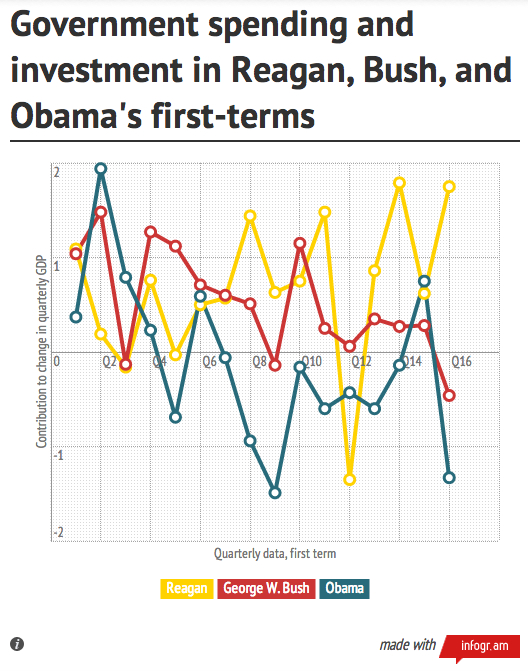
It’s true that right now we have a large federal budget deficit. But that deficit is mainly the result of a depressed economy — and you’re actually supposed to run deficits in a depressed economy to help support overall demand. The deficit will come down as the economy recovers: Revenue will rise while some categories of spending, such as unemployment benefits, will fall. Indeed, that’s already happening."Right now, our policy concern should not be deficits. This austerity push is actually slowing the economy. We should be concerned with spending [infrastructure] and getting people back to work.
Fisching For Answers
What makes Rebecca Kleefisch a suitable Lieutenant Governor? Just wondering. In all the upheavals Wisconsin has seen over the last few years, I was just realizing that Kleefisch has hardly been mentioned, interviewed, or discussed anywhere.
A former television personality ... that's a qualification for running a state? She was a reporter in Rockford, Illinois and Milwaukee, Wisconsin. As Wikipedia details, "Kleefisch's first attempt at politics began when she ran for Lieutenant Governor in 2010. She declared her candidacy live via webcam from her kitchen table, expressing concern for the future of her children and touting her 'kitchen table common sense.'"
Since Scott Walker has taken office, we've barely heard a word from Kleefisch. What does she do? What are her opinions? What are her priorities? Does she have any pet projects? What are her goals? Is there anything she specifically wants to accomplish in her role?
As citizens and voters (and this question primarily is for the right-wingers whom voted for the Walker/Kleefisch ticket) what about Kleefisch made you feel she was good Lieutenant Governor material? Governor material? Does she have an area of expertise? She's a UW-Madison graduate with a degree in journalism and mass communication. This seems appropriate for a television news personality, but Lieutenant Governor?
[Yes, there are many unqualified and, what would appear, uninterested political operatives participating in public service. These same doubts and suspicions can be leveled at them.]
Walker's opinions, although I feel they are reckless and uninformed, are at least somewhat well-known. (And, at least Walker started out as an state assemblyman, working his way up the political ladder.) Sure, Kleefisch is a Republican. I understand she'll parrot the party-line. But what else do we know about any of her positions? Has she ever spoken at length, showing actual in-depth knowledge, regarding specific policies?
Take a look at her State website. There's practically nothing there. Why even bother having the website? The site is completely absent of information and substance. With a yearly salary near $77,000, most would expect a clearer set of job duties, alongside more frequent public appearances, for a lieutenant governor.
The more I think about Kleefisch's sudden rise to the second most powerful position in Wisconsin, the more perplexing it gets.
A former television personality ... that's a qualification for running a state? She was a reporter in Rockford, Illinois and Milwaukee, Wisconsin. As Wikipedia details, "Kleefisch's first attempt at politics began when she ran for Lieutenant Governor in 2010. She declared her candidacy live via webcam from her kitchen table, expressing concern for the future of her children and touting her 'kitchen table common sense.'"
Since Scott Walker has taken office, we've barely heard a word from Kleefisch. What does she do? What are her opinions? What are her priorities? Does she have any pet projects? What are her goals? Is there anything she specifically wants to accomplish in her role?
As citizens and voters (and this question primarily is for the right-wingers whom voted for the Walker/Kleefisch ticket) what about Kleefisch made you feel she was good Lieutenant Governor material? Governor material? Does she have an area of expertise? She's a UW-Madison graduate with a degree in journalism and mass communication. This seems appropriate for a television news personality, but Lieutenant Governor?
[Yes, there are many unqualified and, what would appear, uninterested political operatives participating in public service. These same doubts and suspicions can be leveled at them.]
Walker's opinions, although I feel they are reckless and uninformed, are at least somewhat well-known. (And, at least Walker started out as an state assemblyman, working his way up the political ladder.) Sure, Kleefisch is a Republican. I understand she'll parrot the party-line. But what else do we know about any of her positions? Has she ever spoken at length, showing actual in-depth knowledge, regarding specific policies?
Take a look at her State website. There's practically nothing there. Why even bother having the website? The site is completely absent of information and substance. With a yearly salary near $77,000, most would expect a clearer set of job duties, alongside more frequent public appearances, for a lieutenant governor.
The more I think about Kleefisch's sudden rise to the second most powerful position in Wisconsin, the more perplexing it gets.
Phil Needs A Mulligan
Phil Mickelson, a man who makes millions playing golf, is upset that he may have to pay more in taxes.

Sadly, the article goes along with this 63% fantasy. This is a common mistake in tax reporting - differentiating tax incidence (the amount of total earnings paid in taxes) versus marginal tax rate (the portion of earned income and the tax rate which applies to that portion). If one is going to write an article about some millionaire bitching about the taxes he/she pays, at least do the leg-work and find the actual tax rate.

We're in the second worst depression in the history of the country and Mickelson has the nerve to complain about not being as big of a millionaire? People are out of work and losing their homes, but Mickelson can't get that 5,000 square foot addition on his 4th home and that's equivalent and just as important.
According to Wikipedia, "Although ranked second on the 'all-time money list' of tournament prize money won, Mickelson earns far more from endorsements than from prize money. According to one estimate of 2011 earnings (comprising salary, winnings, bonuses, endorsements and appearances) Mickelson was then the second-highest paid athlete in the United States, earning an income of over $62 million, $53 million of which came from endorsements."
As Len Burman (Professor of Public Affairs at the Maxwell School of Syracuse University) commented, "Please stop whining and give thanks for being able to earn a fabulous living playing a game and selling golf clubs (even after tax). 99.999% of people would never have that option, no matter how hard they worked on their swing." [Burman also estimates, "In net, Mickelson will owe about 52% of his marginal* earning in federal and state taxes."]
Update:
Phil's agent and public relations people must have told him what a douche his comments make him look like. He's begun the apology tour.
*Marginal tax rate: tax payers are divided into tax brackets or ranges, which determine which rate taxable income is taxed at. As income increases, earnings will be taxed at a higher rate than the first dollar earned.
"If you add up all the federal and you look at the disability and the unemployment and the Social Security and the state, my tax rate's 62, 63 percent," he said. "So I've got to make some decisions on what I'm going to do."First of all, lets get what is obviously wrong out of the way - Mickelson doesn't pay 63 percent of his income back in taxes. I think all that sun on those beautiful golf courses must be burning Phil's brain.

Sadly, the article goes along with this 63% fantasy. This is a common mistake in tax reporting - differentiating tax incidence (the amount of total earnings paid in taxes) versus marginal tax rate (the portion of earned income and the tax rate which applies to that portion). If one is going to write an article about some millionaire bitching about the taxes he/she pays, at least do the leg-work and find the actual tax rate.

"There are going to be some drastic changes for me because I happen to be in that zone that has been targeted both federally and by the state and, you know, it doesn't work for me right now," he said. "So I'm going to have to make some changes."Yes, this poor man. He'll have to wait on that 9th home and 6th BMW.
We're in the second worst depression in the history of the country and Mickelson has the nerve to complain about not being as big of a millionaire? People are out of work and losing their homes, but Mickelson can't get that 5,000 square foot addition on his 4th home and that's equivalent and just as important.
According to Wikipedia, "Although ranked second on the 'all-time money list' of tournament prize money won, Mickelson earns far more from endorsements than from prize money. According to one estimate of 2011 earnings (comprising salary, winnings, bonuses, endorsements and appearances) Mickelson was then the second-highest paid athlete in the United States, earning an income of over $62 million, $53 million of which came from endorsements."
As Len Burman (Professor of Public Affairs at the Maxwell School of Syracuse University) commented, "Please stop whining and give thanks for being able to earn a fabulous living playing a game and selling golf clubs (even after tax). 99.999% of people would never have that option, no matter how hard they worked on their swing." [Burman also estimates, "In net, Mickelson will owe about 52% of his marginal* earning in federal and state taxes."]
Update:
Phil's agent and public relations people must have told him what a douche his comments make him look like. He's begun the apology tour.
*Marginal tax rate: tax payers are divided into tax brackets or ranges, which determine which rate taxable income is taxed at. As income increases, earnings will be taxed at a higher rate than the first dollar earned.
Going The Wrong Way
In the article State Surplus To Reach $485 Million; Revenues To Miss Projections, the Republican co-chairs of the Legislature's Joint Finance Committee, Sen. Alberta Darling of River Hills and Rep. John Nygren of Marinette, commented, "The revenue numbers prove we are moving in the right direction. Moving forward on the budget, we will continue to work in a cautious and conservative manner to make sure that taxpayers' funds are spent wisely."
Yet, actually, all the numbers show is that Wisconsin has decreased spending (demand) during a recession. Exactly the opposite of what economics teaches. And, which is why Wisconsin ranks 42nd in job growth among the states over the last year.
To use the Republicans' (misplaced) household analogy, if a household was debt-free but unemployed, would the members of that household feel they were on the right track? We've cut programs and credits to the poor, cut education funding, and gave back $800 million in transportation money, to name a few. Based on Wisconsin's job growth ranking, most would conclude we're going the wrong way.
I'm not sure Republicans really know which way "the right direction" is.
Yet, actually, all the numbers show is that Wisconsin has decreased spending (demand) during a recession. Exactly the opposite of what economics teaches. And, which is why Wisconsin ranks 42nd in job growth among the states over the last year.
To use the Republicans' (misplaced) household analogy, if a household was debt-free but unemployed, would the members of that household feel they were on the right track? We've cut programs and credits to the poor, cut education funding, and gave back $800 million in transportation money, to name a few. Based on Wisconsin's job growth ranking, most would conclude we're going the wrong way.
I'm not sure Republicans really know which way "the right direction" is.
Thursday, January 24, 2013
Republican House Majority Due To Gerrymandering
"But I just have to say one other really important point, because I made a mistake over the past month talking about how Republicans have also won a majority in the House," he continued. "We actually got a minority of votes nationwide in House races."
"It was just gerrymandering from 2010 that gave us the majority."
A post-election analysis by Think Progress' Ian Millhiser determined that House Democrats actually received almost 1.4 million more votes than House Republicans in 2012, but thanks to partisan gerrymandering, Democrats would have needed to win by 7.25 percentage points to take back control of Congress.Scarborough on Republicans Winning House Majority: 'It Was Just Gerrymandering'
The Untouchables: How Wall Street Escaped Prosecution
Watch The Untouchables on PBS. See more from FRONTLINE.
Monday, January 21, 2013
Sunday, January 20, 2013

Saturday, January 19, 2013
Weekend Reading
The Addiction
Inequality Is Holding Back The Recovery
Manufacturing Jobs Use To Pay Well. Not Anymore
More Bogosity From Michelle Rhee
This Is Why You're Fat, America
12 Scientific Reasons Humans Are Irrational
2nd Amendment Ratified To Preserve Slavery
What We Know About Video Games & Violence
When Public Outperforms Private In Services
Where The U.S. Imports Its Oil From
World Needs $57 Trillion Infrastructure By 2030
Inequality Is Holding Back The Recovery
Manufacturing Jobs Use To Pay Well. Not Anymore
More Bogosity From Michelle Rhee
This Is Why You're Fat, America
12 Scientific Reasons Humans Are Irrational
2nd Amendment Ratified To Preserve Slavery
What We Know About Video Games & Violence
When Public Outperforms Private In Services
Where The U.S. Imports Its Oil From
World Needs $57 Trillion Infrastructure By 2030
Friday, January 18, 2013
Thursday, January 17, 2013
Subscribe to:
Posts (Atom)