For Further Reading:
"Those who make peaceful revolution impossible will make violent revolution inevitable." ~ John F. Kennedy
Saturday, April 20, 2013
Tuesday, April 16, 2013
Tuesday Reading
A Tax System Stacked Against The 99 Percent
Reinhart-Rogoff...There Are Serious Problems
Density
Debt-To-GDP Nonsense
Right Wing Twists Facts
Corporate Tax Expenditures
Reinhart-Rogoff...There Are Serious Problems
Density
Debt-To-GDP Nonsense
Right Wing Twists Facts
Corporate Tax Expenditures
Saturday, April 13, 2013
Big League Confusion
Maybe it's just me, but I'm not a big fan of cliche as public policy. The current fervor over a new basketball arena in Milwaukee is full of them. Dan Cody recently opined, "Milwaukee [is] not only deciding on new stadium for the Bucks, but whether we're a major American city anymore."
Yes, without a professional sport team, we're not "big league." Sigh.
Cody proclaims, "Everyone agrees that the Bucks will need a new stadium in order to stay in Milwaukee." Everyone? I'll agree that nearly every professional-sport team-owner blackmails their host city into funding the majority of the cost for a new stadium.
It's all about Milwaukee's image. Where would Milwaukee be without the Bucks? (Stop laughing.)
In explaining what a "huge deal" it is to have a pro team, Cody rattles off Green Bay, Jacksonville, Nashville and Oklahoma City as examples of the transformative power of hosting a pro team. Yes, we all know what world-renowned tourist destinations these locales are. Look out Paris and New York, here's Nashville!
This is the intangibles argument. There's just something that can't be explained, but it's magical and it's a big deal. It just can't be quantified. We're supposed to make a multi-million dollar investment based on the idea of being cool, big league, etc.
Maybe we should be talking about the monopoly control professional sports have over the numbers and locations of teams, and thus their ability to blackmail cities.
Milwaukee already has a basketball and a baseball team. Yet, Cody offers, "Milwaukee is already seen by much of the Country as a city on the decline and giving up our NBA team will only increase that perception." So why isn't Milwaukee already "big league"? If sports teams are such catalysts, why is Milwaukee "on the decline"? We recently built (2001) Miller Park, shouldn't this have eased the decline? Why didn't Miller Park make us "big league"?
And, if logic hasn't been stretched far enough in this ridiculous debate cities have over providing more corporate welfare to team owners, Cody goes on to say, "This City and the area need to give people a reason to want to move here." The Bucks are already here. Where are all the young professionals attracted by the Bucks? Was there a boom in young professionals and activity in the City when the Bradley Center was built in 1988? (There wasn't.) Most move for family, weather, or a job, not because of a basketball team.
And, as I've repeatedly said, if stadiums are such no-brainers, such economic catalysts, why does the public have to assume most of the risk (cost)? Sports represent one-tenth of one percent of the local economy; and some think that is an overstatement.
We can't raise taxes for good jobs, for schools, for parks, for public transportation, for health care, for retirement, etc. But, to be cool, to be "big league," that's a reason for a new tax?
I like sports. It's another entertainment option for a city. But that's hardly a reason to give away millions of dollars.
Yes, without a professional sport team, we're not "big league." Sigh.
Cody proclaims, "Everyone agrees that the Bucks will need a new stadium in order to stay in Milwaukee." Everyone? I'll agree that nearly every professional-sport team-owner blackmails their host city into funding the majority of the cost for a new stadium.
It's all about Milwaukee's image. Where would Milwaukee be without the Bucks? (Stop laughing.)
In explaining what a "huge deal" it is to have a pro team, Cody rattles off Green Bay, Jacksonville, Nashville and Oklahoma City as examples of the transformative power of hosting a pro team. Yes, we all know what world-renowned tourist destinations these locales are. Look out Paris and New York, here's Nashville!
This is the intangibles argument. There's just something that can't be explained, but it's magical and it's a big deal. It just can't be quantified. We're supposed to make a multi-million dollar investment based on the idea of being cool, big league, etc.
Maybe we should be talking about the monopoly control professional sports have over the numbers and locations of teams, and thus their ability to blackmail cities.
Milwaukee already has a basketball and a baseball team. Yet, Cody offers, "Milwaukee is already seen by much of the Country as a city on the decline and giving up our NBA team will only increase that perception." So why isn't Milwaukee already "big league"? If sports teams are such catalysts, why is Milwaukee "on the decline"? We recently built (2001) Miller Park, shouldn't this have eased the decline? Why didn't Miller Park make us "big league"?
And, if logic hasn't been stretched far enough in this ridiculous debate cities have over providing more corporate welfare to team owners, Cody goes on to say, "This City and the area need to give people a reason to want to move here." The Bucks are already here. Where are all the young professionals attracted by the Bucks? Was there a boom in young professionals and activity in the City when the Bradley Center was built in 1988? (There wasn't.) Most move for family, weather, or a job, not because of a basketball team.
And, as I've repeatedly said, if stadiums are such no-brainers, such economic catalysts, why does the public have to assume most of the risk (cost)? Sports represent one-tenth of one percent of the local economy; and some think that is an overstatement.
We can't raise taxes for good jobs, for schools, for parks, for public transportation, for health care, for retirement, etc. But, to be cool, to be "big league," that's a reason for a new tax?
I like sports. It's another entertainment option for a city. But that's hardly a reason to give away millions of dollars.
Weekend Reading
Choice Schools Not Outperforming MPS
House Bill Would Give Employers "Flexibility"
Infrastructure In America
Mapping Out Arguments Against Chained CPI
The Myth Of The Failing Bridge
A Pension Deficit Disorder
Why Do People Hate Deficits?
Why Republicans Are Wrong About Recalls
7 Chilling Facts About Retirement
The 401(K) Is A $240 Billion Waste
House Bill Would Give Employers "Flexibility"
Infrastructure In America
Mapping Out Arguments Against Chained CPI
The Myth Of The Failing Bridge
A Pension Deficit Disorder
Why Do People Hate Deficits?
Why Republicans Are Wrong About Recalls
7 Chilling Facts About Retirement
The 401(K) Is A $240 Billion Waste
Labels:
401(k),
chained CPI,
choice schools,
employment law,
infrastructure,
pensions,
recall,
Republicans,
retirement
Thursday, April 11, 2013
Welders Wanted. We Don't Need No Stinking Welders!
Welding Job Fair Fails To Spark Interest
There is such a skills mismatch. Some Wisconsin companies just can't find welders. MATC was nice enough to organize a job fair to facilitate those looking for work connecting with the companies that supposedly need them. Too bad the companies, crying about Wisconsin not having skilled workers to fill positions, also seem to not have the time to show up.
Tuesday, April 9, 2013
Sayonara To Another False Idol
It's Thatcher's World, We're Just Living In It
A Look Back At Margaret Thatcher's Economic Record
How Britain Changed Under Margaret Thatcher
Did Thatcher Turn Britain Around?
Sunday, April 7, 2013
R.I.P.: Democracy
Last November, the American people preferred Democratic House candidates to Republican House candidates by almost 1.4 million votes, yet Republicans still hold a substantial House majority due in large part to partisan gerrymandering...[G]errymandering is a major form of disenfranchisement. In the seven states where Republicans redrew the districts, 16.7 million votes were cast for Republicans and 16.4 million votes were cast for Democrats. This elected 73 Republicans and 34 Democrats. Given the average percentage of the vote it takes to elect representatives elsewhere in the country, that combination would normally require only 14.7 million Democratic votes. Or put another way, 1.7 million votes (16.4 minus 14.7) were effectively packed into Democratic districts and wasted. [source]
Republicans considered population in their 2011 redistricting scheme, but they studied voting patterns just as carefully. The GOP packed likely Democrats into supermajority districts and gave their own party the statistical edge in contested areas. The results were not just anti-Democratic but anti-democratic. In 2012, Republicans won only 46% of the total votes cast for Assembly but took 61% of the seats. [source]
Sam Wang, an associate professor at Princeton University, has done a thorough analysis of election results that was published in Sunday’s New York Times. Wang found that even though Democrats received 1.4 million more votes than Republicans in House races, the GOP won 234 seats to the Democrats’ 201. How did this happen? [source]Republicans Foil What Majority Wants By Gerrymandering
The Great Gerrymander Of 2012
Republicans Won House Because Of Gerrymandering
Now That's What I Call Gerrymandering
How Gerrymandering Helped GOP Keep Control Of House
How Ridiculous Gerrymanders Saved The House Republican Majority
GOP Memo: Gerrymandering Won Us The House Majority
Labels:
cheating,
class warfare,
corruption,
democracy,
elections,
gerrymandering,
greed,
income inequality,
Republican,
voting
Saturday, April 6, 2013
Weekend Reading: Scott Walker
Job Slump Is Walker's Fault
Governor Walker's Fateful Decision On Rail
Now imagine an updated rail system carrying people from the Twin Cities to downtown Chicago in less than six hours — even faster than driving and on a par with a complicated airline connection.
Oops! Don't consider it. That scenario is precisely what Walker killed when he gave back the $810 million — federal funding that would have paid the full capital costs of connecting Madison to Milwaukee...
"Failing to invest in the infrastructure that undergirds the economy is a very dangerous move," says Kevin Brubaker of the Environmental Policy and Law Center. He rattles off the names of prosperous 19th-century American cities that decayed when their transportation links became obsolescent.
How odd that a pro-business Republican governor didn't understand that dynamic.
Walker Loves Milwaukee? We're Not Feeling It
In 1951, Milwaukee County received only $1 back for every $2.10 its residents paid in state taxes. It was not until 1954, when the Wisconsin Supreme Court intervened, that population alone became the basis for reapportionment, and it was not until 1964 that parity was finally achieved, again under court auspices.
Almost 50 years later, the imbalance has returned in a different form. Republicans considered population in their 2011 redistricting scheme, but they studied voting patterns just as carefully. The GOP packed likely Democrats into supermajority districts and gave their own party the statistical edge in contested areas. The results were not just anti-Democratic but anti-democratic. In 2012, Republicans won only 46% of the total votes cast for Assembly but took 61% of the seats...
"If you want to keep people in the city," Walker piously advised, "you should have a great city."
Excuse me? Where do you suppose the Brewers and the Bucks play, governor? Which city is the home of such giants as Harley-Davidson, Northwestern Mutual and the Manpower Group? Where is the state's most vibrant theater scene? Who's got the greatest concentration of fine restaurants? The biggest zoo and the best museum? Where does the Calatrava spread its wings? Where will you find one of the most gorgeous urban shorelines on the Great Lakes? The world's largest outdoor music festival? The state's greatest range of housing choices or, for that matter, the greatest range of human beings? ...
The pull of the suburbs has been a powerful force in American life for decades - not just in Milwaukee - and it's clearly in any city's best interests to make residency a condition of employment. Milwaukee's rule has been on the books since 1938, and applicants still line up for jobs by the thousands. Those who are hired live among those they serve, and where's the injustice in that? ...
Perhaps Walker's true colors shone most brightly during last year's gubernatorial recall election. The governor didn't just run against Milwaukee Mayor Tom Barrett; he ran against Milwaukee. His campaign ads showed polluted harbors and dead babies, and Walker actually said at one point, "We don't want Wisconsin to become like Milwaukee." You have to wonder if this guy even hears himself anymore. Most maps I've seen place Milwaukee well within Wisconsin's borders, but Walker ignored geography to score political points...State-Shared Revenue To City Has Shrunk
| Year | State-shared revenue |
| 2003 | $249,921,000 |
| 2004 | $240,375,000 |
| 2005 | $240,200,000 |
| 2006 | $239,725,000 |
| 2007 | $239,800,000 |
| 2008 | $237,662,314 |
| 2009 | $238,481,500 |
| 2010 | $236,213,000 |
| 2011 | $236,958,000 |
| 2012 | $226,806,000 |
| 2013 | $227,169,000 |
| Share of budget for general city services | 2003 | 2013 |
| Fire Dept. | 16.1% | 17.9% |
| Police Dept. | 34.6% | 40.6% |
| Protective Services total | 50.7% | 58.8% |
Faulty Excuses
The Journal Sentinel recently reviewed Scott Walker's job creation record. The findings, as we've all seen, are quite disappointing. Yet, the Journal believes we shouldn't be pointing fingers or finding fault. They don't think such things matter. The Journal feels we should just "focus on policies that will help give the economy a boost over the long-term."
So, right off the bat, since it is the subheader to their article, if they're so concerned with boosting long-term economic prospects, why did the Journal support Scott Walker's refusal of nearly a billion dollars in federal aid for a train which, when completed, would have better connected a crucial economic mega-region - Minneapolis, Madison, Milwaukee and Chicago?
I guess if I were partially responsible for such an generation-altering economic blunder I wouldn't want to focus on fault, blame, or finger-pointing either.
Hilariously, the Journal believes the only two choices for fault are either: 1) it's Walker's fault or 2) it's the recall election organizers fault. No responsibility for the largest newspaper in the state? Nope. As the public keeper-of-record, the watchdog, our fourth estate, they have no responsibility in presenting truth, what works and what doesn't, what is right or wrong? Hmmm, how about it's mostly Walker's fault, but he couldn't have done all the damage he has without the support and endless articles, apologies and endorsements from the Journal Sentinel.
Their obfuscation tour continues, "But his political finger-pointing is pointless. Not that Walker doesn't deserve responsibility - he's the governor. But the problems facing the state's economy go far beyond the power of a single person to solve." This seems like a much different tone from the newspaper than when it was endorsing Walker during his campaigning. We were going to be "open for business" and the Journal agreed. But now that we're not open for business, the Journal feels its "pointless" for the public to remember who steered them wrong.
At this point the article veers off into the Journal 'buzz-words as policy' section. They talk of "entrepreneurial," "risk-takers," "research," and "venture capital." Here, again, they stump for a state-funded venture capital fund. Another Scott Walker-supported idea that has fizzled and proven unimpressive elsewhere. Again, ideas - whose were they? Were they successful? Right? Wrong? This will be another one of those ideas Walker and the Journal push for, but when it fails (doesn't produce anywhere near the results they expect), they would like us all to forget whose idea it was.
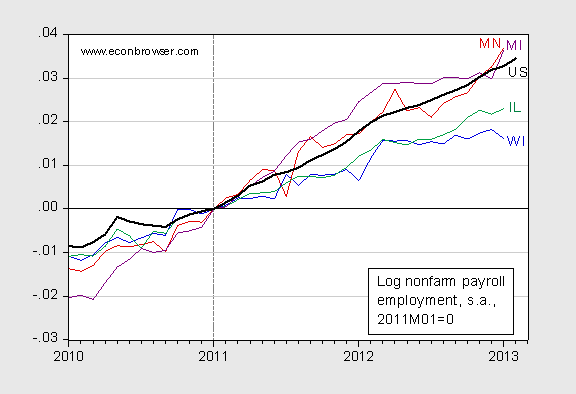
They point to an economic lethargy among upper Midwest states as an explanation for our poor performance. All these states have large manufacturing sectors, which have been underperforming, thus things are bad. Yet, as this chart from UW-Madison economist Menzie Chinn shows, our Midwest neighbor states have outperformed Wisconsin.
Next, the Journal goes back to another well-worn (false) explanation - structural unemployment - the skills mismatch. The Wisconsin unemployment rate is hovering around 7 percent. One percentage point of that may be structural, but the majority of our unemployment is not. And, this is normally the case, even in a recession (although structural unemployment may increase slightly toward the 1.5 percentage point range). Structural unemployment can exist, but it's not the majority of our unemployment, thus is does not explain, nor provide the prescription for, unemployment. UWM professor Marc Levine recently released his own study debunking this skills mismatch meme the Journal continually tries to push.
The Journal then points out that construction and its ancillary jobs are down and they imply they don't think they'll be coming back. Hello?! Housing bust? Great Recession? Now, I don't think they'll come back to the housing bubble numbers (that's why it's called a bubble), but they will no doubt recover and stabilize as the economy does the same. We'll always need windows, doors and construction.
"Should we hold Walker responsible? Of course. He's the one who promised that 250,000 private-sector jobs would be created during his first term - a pledge that he is far from fulfilling. But politicians always get too much blame when the economy is weak and too much credit when it is strong. We think that's the case here," the article hedges. Talk about having your cake and eating it, too. So, yeah, he's kinda responsible, but can he really do that much anyway? He's trying, that's all that matters. Lets just stick our collective head in the sand and move on. It almost seems this article merely used the 'whose to blame?' question as a springboard for a rant about pet projects and policy prescriptions favored by Walker and the Journal Sentinel.
Now, the Journal turns back to another of their favorite "development" ideas - venture capital. To believe such is a panacea, we must ignore, "Josh Lerner, of Harvard, has found the number of exceptional venture capitalists is very small. Harold Bradley, of the Kaufmann Foundation, believes venture capitalists have plenty of money, but allocate it very inefficiently, and therefore should not be receiving additional public dollars with the hope of boosting a local economy. Bradley and Carl Schramm, in an article for Business Week, write that the current focus on fees has promoted start-up flipping rather than nurturing." Scott Walker and the Journal Sentinel want venture capital to be a centerpiece, a major investment, of our economic development playbook. This disregards the fact that venture capital, overall, has been a bad/subpar return on investment. And, when it has been successful, only a very select few were rewarded.
Plus, we're just exiting an economic downturn caused by speculation and gambling - casino capitalism. We've seen how destructive this can be. Scott Walker, Alberta Darling, and the Journal Sentinel's answer to this is to double-down and speculate with venture capital (supported with public dollars).
The article closes with a buzz-word bonanza and one more debunked idea - young companies are the answer, they create new jobs. As I've written before, "The pace of hiring may be strong in young companies, but what they also fail to mention is that the pace of firing is also higher amongst younger companies."
So, whose fault is it anyway? It's largely Scott Walker's. But the Journal Sentinel also bears responsibility for supporting his election and for pushing his debunked ideas. And, all this does matter.
So, right off the bat, since it is the subheader to their article, if they're so concerned with boosting long-term economic prospects, why did the Journal support Scott Walker's refusal of nearly a billion dollars in federal aid for a train which, when completed, would have better connected a crucial economic mega-region - Minneapolis, Madison, Milwaukee and Chicago?
I guess if I were partially responsible for such an generation-altering economic blunder I wouldn't want to focus on fault, blame, or finger-pointing either.
Hilariously, the Journal believes the only two choices for fault are either: 1) it's Walker's fault or 2) it's the recall election organizers fault. No responsibility for the largest newspaper in the state? Nope. As the public keeper-of-record, the watchdog, our fourth estate, they have no responsibility in presenting truth, what works and what doesn't, what is right or wrong? Hmmm, how about it's mostly Walker's fault, but he couldn't have done all the damage he has without the support and endless articles, apologies and endorsements from the Journal Sentinel.
Their obfuscation tour continues, "But his political finger-pointing is pointless. Not that Walker doesn't deserve responsibility - he's the governor. But the problems facing the state's economy go far beyond the power of a single person to solve." This seems like a much different tone from the newspaper than when it was endorsing Walker during his campaigning. We were going to be "open for business" and the Journal agreed. But now that we're not open for business, the Journal feels its "pointless" for the public to remember who steered them wrong.
At this point the article veers off into the Journal 'buzz-words as policy' section. They talk of "entrepreneurial," "risk-takers," "research," and "venture capital." Here, again, they stump for a state-funded venture capital fund. Another Scott Walker-supported idea that has fizzled and proven unimpressive elsewhere. Again, ideas - whose were they? Were they successful? Right? Wrong? This will be another one of those ideas Walker and the Journal push for, but when it fails (doesn't produce anywhere near the results they expect), they would like us all to forget whose idea it was.
They point to an economic lethargy among upper Midwest states as an explanation for our poor performance. All these states have large manufacturing sectors, which have been underperforming, thus things are bad. Yet, as this chart from UW-Madison economist Menzie Chinn shows, our Midwest neighbor states have outperformed Wisconsin.
Next, the Journal goes back to another well-worn (false) explanation - structural unemployment - the skills mismatch. The Wisconsin unemployment rate is hovering around 7 percent. One percentage point of that may be structural, but the majority of our unemployment is not. And, this is normally the case, even in a recession (although structural unemployment may increase slightly toward the 1.5 percentage point range). Structural unemployment can exist, but it's not the majority of our unemployment, thus is does not explain, nor provide the prescription for, unemployment. UWM professor Marc Levine recently released his own study debunking this skills mismatch meme the Journal continually tries to push.
The Journal then points out that construction and its ancillary jobs are down and they imply they don't think they'll be coming back. Hello?! Housing bust? Great Recession? Now, I don't think they'll come back to the housing bubble numbers (that's why it's called a bubble), but they will no doubt recover and stabilize as the economy does the same. We'll always need windows, doors and construction.
"Should we hold Walker responsible? Of course. He's the one who promised that 250,000 private-sector jobs would be created during his first term - a pledge that he is far from fulfilling. But politicians always get too much blame when the economy is weak and too much credit when it is strong. We think that's the case here," the article hedges. Talk about having your cake and eating it, too. So, yeah, he's kinda responsible, but can he really do that much anyway? He's trying, that's all that matters. Lets just stick our collective head in the sand and move on. It almost seems this article merely used the 'whose to blame?' question as a springboard for a rant about pet projects and policy prescriptions favored by Walker and the Journal Sentinel.
Now, the Journal turns back to another of their favorite "development" ideas - venture capital. To believe such is a panacea, we must ignore, "Josh Lerner, of Harvard, has found the number of exceptional venture capitalists is very small. Harold Bradley, of the Kaufmann Foundation, believes venture capitalists have plenty of money, but allocate it very inefficiently, and therefore should not be receiving additional public dollars with the hope of boosting a local economy. Bradley and Carl Schramm, in an article for Business Week, write that the current focus on fees has promoted start-up flipping rather than nurturing." Scott Walker and the Journal Sentinel want venture capital to be a centerpiece, a major investment, of our economic development playbook. This disregards the fact that venture capital, overall, has been a bad/subpar return on investment. And, when it has been successful, only a very select few were rewarded.
Plus, we're just exiting an economic downturn caused by speculation and gambling - casino capitalism. We've seen how destructive this can be. Scott Walker, Alberta Darling, and the Journal Sentinel's answer to this is to double-down and speculate with venture capital (supported with public dollars).
The article closes with a buzz-word bonanza and one more debunked idea - young companies are the answer, they create new jobs. As I've written before, "The pace of hiring may be strong in young companies, but what they also fail to mention is that the pace of firing is also higher amongst younger companies."
So, whose fault is it anyway? It's largely Scott Walker's. But the Journal Sentinel also bears responsibility for supporting his election and for pushing his debunked ideas. And, all this does matter.
Top 10 Cities If You Like Bars
2. Milwaukee
Perhaps it’s no surprise that Milwaukee ranks high on this list, given the many breweries that thrive in the area, including the big MillerCoors and microbreweries such as Sprecher. Its Major League Baseball team is even named the Brewers. The long presence of breweries in the area contributes to a strong drinking culture, Kolko said. The Milwaukee metropolitan area has 8.5 bars for every 10,000 households. The median list price of a home in the area is $109 per square foot.
Labels:
bars,
City of Milwaukee,
Market Watch,
taverns
Weekend Reading
The Gold Standard Is Still A Really, Really Terrible Idea
["Recession bars in GREY...The "golden" years were actually the greyest years, the worst years. The economy was in recession 52 percent of the time between 1874 and 1933. We've been in recession just 16 percent of the time thereafter. ]
Labels:
America,
class warfare,
debt,
firearms,
gold standard,
income inequality,
income taxes,
Keynesianism,
taxes
Friday, April 5, 2013
More Class War
We, as a country (whether it be at the federal or the state level), can't raise taxes on millionaires. No, no, no.
But, we can cut Social Security, where the average yearly Social Security retirement benefit is $14,800?
U.S.A.!
But, we can cut Social Security, where the average yearly Social Security retirement benefit is $14,800?
U.S.A.!
Milwaukee Brewer "Destination" Delusion
A recent OnMilwaukee article proclaimed, "Attanasio has made the Brewers a destination."
For evidence, the following player signings were offered as proof:
- Kyle Lohse [34 years old, 4.45 career ERA]
- Zack Greinke [no longer with the Brewers]
- Ricky Bottalico [retired]
- Jeff Suppan [played for San Diego in 2012]
- Randy Wolf [no longer with the Brewers]
- Aramis Ramirez [34 years old, .280 career hitter]
If the article were titled or was implying, "Brewers turn things around with good management, keen minor league development, and workable role-player signings," I'd agree. But to say the Brewers have become a destination among sought-after free agents, that's quite a stretch.
According to the MLB Network (2013 season projections), the Brewers currently have only 3 of the top 100 players in baseball: Yovani Gallardo, Aramis Ramirez and Ryan Braun. Gallardo and Braun were both draft picks of the Brewers.
It's nice to see the Brewers are competitive again. But lets not put the cart ahead of the horse.
Go Brewers!
Logic Requirement
Since firefighters, police officers, and their Wisconsin political operatives believe public workers should be able to hold a job in one place while also being able to live in another, one has to ask, should the same hold true for Aldermen? Senators? State Representatives? Mayors? Where does it end?
Does the President even have to live in the U.S.?
Can a police officer - or any person assumed to be working for the benefit of a specific community which employs that person - really be committed to serving and protecting a place where he/she doesn't want to live and doesn't know anything about?
If we extrapolate this "freedom" argument [because it's all about freedom!] against the residency requirement, these are the logical conclusions. Regardless of whom one's employer might be, that employee has the "freedom" to live wherever he/she wants.
The post-Great Depression history of this country was about working together, helping each other out, improving our schools, and improving the country. We built infrastructure that was globally admired. Income inequality shrank and the middle class was born. We established labor laws, unemployment insurance, Social Security, 40-hour work weeks, workplace safety laws, Medicare, the minimum wage, and a host of other policies and programs that helped this country become the envy of the world.
The past few decades modus operandi has been: bash-the-poor, decrease worker wages, cut programs and provisions for the majority of citizens, and do everything we can to ignore the national and local problems facing us. We've been making it easier for the well-to-do to evade their social responsibilities, alongside a general disinterest and dismissal of what policy (like the residency requirement) does, and can do, for everyone's quality of life.
Instead, we see the remaining members of the middle class running away, hoping to carve out their own little paradise adjacent to the gated communities of the mega-rich.
But there's only so far to run. Eventually, we have to address the problems, start fixing schools, start repairing infrastructure, and start thinking about good jobs with stable retirements. People need food and water, health care, and shelter. The U.S. ignore's this growing income inequality at it's own peril. Eventually the oppressed will rise up. And now, thanks to Republicans, they will all have guns.
When Social Security and Medicare are gone, when the minimum wage is abolished, when every last crumb of income the ill, elderly, poor, downtrodden, and retired had is gone, who is going to pay the bills? Who is going to fix the roads and bridges? Who is going to be able to buy all thecrap stuff the rich are selling?
A residency requirement, in part, tries to address this flight from a specific community. By requiring workers live where they work, the majority of the money they earn (paid for by the taxpayers they work for) is re-spent in the community. Thus, helping to improve the quality of life for all in the community.
Our bipolar political vision seems to operate under the assumption that we can either get blood from a stone (keep cutting programs for the poor and middle class) or that there really isn't anything we need to be spending on (especially of it helps the poor or the middle class). Pollyanna didn't suffer delusions of this extent. Logic requires us to think differently.
Does the President even have to live in the U.S.?
Can a police officer - or any person assumed to be working for the benefit of a specific community which employs that person - really be committed to serving and protecting a place where he/she doesn't want to live and doesn't know anything about?
If we extrapolate this "freedom" argument [because it's all about freedom!] against the residency requirement, these are the logical conclusions. Regardless of whom one's employer might be, that employee has the "freedom" to live wherever he/she wants.
The post-Great Depression history of this country was about working together, helping each other out, improving our schools, and improving the country. We built infrastructure that was globally admired. Income inequality shrank and the middle class was born. We established labor laws, unemployment insurance, Social Security, 40-hour work weeks, workplace safety laws, Medicare, the minimum wage, and a host of other policies and programs that helped this country become the envy of the world.
The past few decades modus operandi has been: bash-the-poor, decrease worker wages, cut programs and provisions for the majority of citizens, and do everything we can to ignore the national and local problems facing us. We've been making it easier for the well-to-do to evade their social responsibilities, alongside a general disinterest and dismissal of what policy (like the residency requirement) does, and can do, for everyone's quality of life.
Instead, we see the remaining members of the middle class running away, hoping to carve out their own little paradise adjacent to the gated communities of the mega-rich.
But there's only so far to run. Eventually, we have to address the problems, start fixing schools, start repairing infrastructure, and start thinking about good jobs with stable retirements. People need food and water, health care, and shelter. The U.S. ignore's this growing income inequality at it's own peril. Eventually the oppressed will rise up. And now, thanks to Republicans, they will all have guns.
When Social Security and Medicare are gone, when the minimum wage is abolished, when every last crumb of income the ill, elderly, poor, downtrodden, and retired had is gone, who is going to pay the bills? Who is going to fix the roads and bridges? Who is going to be able to buy all the
A residency requirement, in part, tries to address this flight from a specific community. By requiring workers live where they work, the majority of the money they earn (paid for by the taxpayers they work for) is re-spent in the community. Thus, helping to improve the quality of life for all in the community.
Our bipolar political vision seems to operate under the assumption that we can either get blood from a stone (keep cutting programs for the poor and middle class) or that there really isn't anything we need to be spending on (especially of it helps the poor or the middle class). Pollyanna didn't suffer delusions of this extent. Logic requires us to think differently.
Saturday, March 30, 2013
Milwaukee Real Estate Trends
The median sale price per unit for multifamily properties in the metro area has been rising for five straight months, climbing 4.4% during that time. Prior to that, sale prices fell 6.6% over a five-month period ending in May. Compared to last quarter, the average sale price per unit for multifamily properties rose by 3.7% to $19,967. During the past year, though, sale prices have dropped by 5.1%. The highest median price of the past three years was set in December 2009 at $58,059. In comparison, the median sale price is now 65.6% lower. However, the current price is 4.4% higher than the May 2012 figure, which was the three-year low.
The median sale price per square foot for office properties in the metro area has been falling for four straight months, dropping 7.9% during that time. Sale prices rose 9.9% earlier this year during a seven-month streak that ended in January. Sale prices per square foot for office properties dipped to $30.85, a 7.9% decrease compared with the end of the prior quarter. Similarly, over the previous year, sale prices have dropped by 13.2%. The metro area saw its median sale price fall to its three-year low this month. The previous low point was set last month at $32.41.
Median sale price per square foot for retail properties in the metro area is currently in a 15 month downward trend, but the rate of decline has slowed in the last month. At $43.32, sale prices per square foot for retail properties have decreased by 9.5% compared to the end of the prior quarter. Sale prices are also down over the previous 12 months, having declined by 35.5%. The metro area saw its median sale price fall to its three-year low this month. The previous low was $44.18, which was set last month.
Multifamily properties in the Milwaukee Metro Area are staying on the market longer than they did during the same time last year, and the change is greater than that at the state level. They now last 182 days on the market at the metro level, an increase of 10.8% year-over-year. In comparison, these buildings last 148 days at the state level, 13.8% less than last year. From the lowest point, which was set in January 2011, time on market has risen 38.3%.
Compared with a year earlier, office properties in the Milwaukee Metro Area are staying on the market longer, and the gap is greater at the metro level than at the state level. They now last 281 days on the market at the metro level, an increase of 12.5% year-over-year. Meanwhile, they stay on the market 253 days at the state level, down 15.6%. Compared with January 2010, when the time on market was at its lowest, these properties are now on the market 41.3% longer. The time that office properties stay on the market has risen 12.1% over the past three months.
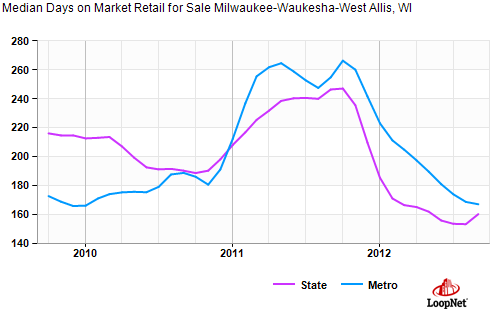
Retail properties in the Milwaukee Metro Area are turning over more quickly compared to last year, as the time on market dropped 34.4% to 167 days. During the same time period, the time on market for these properties at the state level has fallen even more as a percentage, by 35%, to 160. From October 2011, when the time on market was at its highest, it has fallen 37.3%.
Asking rates for office properties have fallen 1.8% to $14.28 per square foot over the past quarter. However, over the past year asking lease rate have risen 0.3%. Lease rates for office properties hit a three-year peak in March 2009 at $14.72 per square foot. In comparison, the current median asking price is down by 2.1%. On the other hand, the lowest asking lease rate in the past three years was seen in February 2011 at $13.96.
Asking lease rates for retail properties have gone up versus past quarter, rising 0.1% to $14.44 per square foot. But for the year asking rates have dropped 3.1%. Lease rates for retail properties reached a three-year high in July 2008 at $16.59 per square foot. The current median asking lease rate is 1.6% lower. On the other hand, the lowest asking lease rate in the past three years was seen in December 2005 at $14.21.
The median sale price per square foot for office properties in the metro area has been falling for four straight months, dropping 7.9% during that time. Sale prices rose 9.9% earlier this year during a seven-month streak that ended in January. Sale prices per square foot for office properties dipped to $30.85, a 7.9% decrease compared with the end of the prior quarter. Similarly, over the previous year, sale prices have dropped by 13.2%. The metro area saw its median sale price fall to its three-year low this month. The previous low point was set last month at $32.41.
Median sale price per square foot for retail properties in the metro area is currently in a 15 month downward trend, but the rate of decline has slowed in the last month. At $43.32, sale prices per square foot for retail properties have decreased by 9.5% compared to the end of the prior quarter. Sale prices are also down over the previous 12 months, having declined by 35.5%. The metro area saw its median sale price fall to its three-year low this month. The previous low was $44.18, which was set last month.
Multifamily properties in the Milwaukee Metro Area are staying on the market longer than they did during the same time last year, and the change is greater than that at the state level. They now last 182 days on the market at the metro level, an increase of 10.8% year-over-year. In comparison, these buildings last 148 days at the state level, 13.8% less than last year. From the lowest point, which was set in January 2011, time on market has risen 38.3%.
Compared with a year earlier, office properties in the Milwaukee Metro Area are staying on the market longer, and the gap is greater at the metro level than at the state level. They now last 281 days on the market at the metro level, an increase of 12.5% year-over-year. Meanwhile, they stay on the market 253 days at the state level, down 15.6%. Compared with January 2010, when the time on market was at its lowest, these properties are now on the market 41.3% longer. The time that office properties stay on the market has risen 12.1% over the past three months.
Retail properties in the Milwaukee Metro Area are turning over more quickly compared to last year, as the time on market dropped 34.4% to 167 days. During the same time period, the time on market for these properties at the state level has fallen even more as a percentage, by 35%, to 160. From October 2011, when the time on market was at its highest, it has fallen 37.3%.
Asking lease rates for retail properties have gone up versus past quarter, rising 0.1% to $14.44 per square foot. But for the year asking rates have dropped 3.1%. Lease rates for retail properties reached a three-year high in July 2008 at $16.59 per square foot. The current median asking lease rate is 1.6% lower. On the other hand, the lowest asking lease rate in the past three years was seen in December 2005 at $14.21.
Labels:
City of Milwaukee,
commercial real estate,
economy,
leases,
Loopnet,
prices,
real estate,
rents,
sales,
Wisconsin
Friday, March 29, 2013
A Steaming Pile Of Boldness
The Journal Sentinel is back pushing Walker's venture capital slush fund, Legislature Should Establish A Fund For Venture Capital.
Wisconsin politicians continue to argue about how many jobs have been created on Gov. Scott Walker's watch - and even how to count those jobs. This was inevitable, of course, given the governor's promise that 250,000 jobs would be created during his first term.
But rather than argue over numbers, how about focusing on policies that might make a difference?Yes, just forget about Walker's (completely ridiculous) promise of 250,000 jobs, which undoubtedly helped win him the election. We don't want to actually evaluate politicians on the things they've said.
The whole article is a well-worn regurgitation of cliches regarding the magic that is venture capital.
With job growth and income sluggish in the state, we continue to believe the best answer is unleashing good ideas that could be turned into young companies that will employ people. Research by the Ewing and Marion Kauffman Foundation a couple of years ago found that between 1977 and 2005, existing companies lost about 1 million jobs a year while new companies added an average of 3 million jobs. Since 2008, the pace of hiring is stronger in companies that are two years or younger, Kauffman found.
Simply put, we need more entrepreneurs, and we need to figure out how to mentor them and invest in their ideas.Yes, we need more entrepreneurs. We need more jobs. Bold insight.
The pace of hiring may be strong in young companies, but what they also fail to mention is that the pace of firing is also higher amongst younger companies.
The article then (to supposedly support a venture capital fund) points to UW-Madison's Research Park, and UW-Milwaukee's and the Medical College's increased research, which has created jobs. Yet, this seems like more of a substantiation for investment in our universities. Is the Journal implying we should spend public dollars for private benefit? Should we continue the process whereby our public sector provides tax credits, other funding, university R&D, and a host of other giveaways, in which private entities get to reap the majority of the rewards? Here's a novel idea, how about public investment with public rewards.
But young companies need a continuum of support - from the early going when the entrepreneur mortgages her house to get started to the first "angel" investors who take notice to the point where larger infusions of money are needed from venture capitalists. And in Wisconsin, there long has been a gulf between the typical angel investor round and the venture capital round.What did companies do before venture capital?
Despite a good fourth quarter, Wisconsin attracted only $95 million last year, according to the MoneyTree Report by PricewaterhouseCoopers LLP and the National Venture Capital Association. Nationwide, venture capitalists invested $26.5 billion.What is the average amount states attract? Where does Wisconsin rank among the states in attracting capital?
Another article from the Journal notes, "State companies pulled in more than $95 million during the full year, up 31% from 2011, when they raised about $73 million of venture capital...Nationally, venture capital investment declined for the first time in three years. Venture capitalists invested $26.5 billion in 3,698 deals in 2012, a 10% decrease in dollars from a year earlier."
So, nationally venture capital is declining, yet over the past year it increased 31% in Wisconsin. Seems like money has already decided Wisconsin is a decent investment, even without the State providing additional funding.
The Journal continued, "But while $25 million is a start, it's probably only a down payment. The state needs something closer to $150 million, perhaps funded over several budget cycles, to attract the interest of top venture capital funds. "If the state really wants to get to critical mass, then we're going to need more than $25 million," said Tom Still, president of the Wisconsin Technology Council and the Wisconsin Innovation Network. The "Be Bold Wisconsin Prosperity Strategy" report, which grew out of a series of economic summits around the state in 2010, called for an even larger commitment."
We need to put up at least $25 million and also some type of continuing commitment? If we applied the same amount to public works - infrastructure, green buildings, energy grid, sewage and water systems, etc. - wouldn't that just as efficiently and effectively ignite the economy and put people back to work? And, we wouldn't have to worry about the speculative nature and the whims of the private sector. Not to mention, we could actually ensure these were good paying jobs.
Finally, it seems rather odd that the Journal Sentinel and the Republican class-war criminals were so quick to talk about a Wisconsin's (phony) budget crisis, how we were broke, how public workers had bankrupted us and caused the recession. Yet, in their next breath, they cackle about spending on sport stadiums, venture capital, and numerous other ways of funneling public dollars to obscure private sector schemes. Yes, we're broke, until the power-brokers whom are already garnering most of society's gains decide they want more.
For Further Reading:
Casino Capitalism
Cut Out The (Private Sector) Middle Man
Deja Vu
Fund Fail
Haplessly Venturing
Risky Business
Something Venture, (Virtually) Nothing Gained
Venturing Aimlessly
Venturing Wisconsin's Money
Weekend Reading: Scott Walker Edition
Scott Walker Medicaid Decision Could Cost Wisconsin Employers $36 Million
Wisconsin Gets An "F" For Disclosing Its Spending
Scott Walker Budget Could Create Deficit In Next Biennium
Walker Loves Milwaukee? We're Not Feeling It
Wisconsin A Tax Haven For Businesses
Wisconsin Falls To 44th Nationally In Private-Sector Job Creation
Wisconsin Gets An "F" For Disclosing Its Spending
Scott Walker Budget Could Create Deficit In Next Biennium
Walker Loves Milwaukee? We're Not Feeling It
Wisconsin A Tax Haven For Businesses
Wisconsin Falls To 44th Nationally In Private-Sector Job Creation
Wisconsin ranked 44th out of the 50 states in private-sector job creation in the 12 months from September 2011 to September 2012. The state's position has deteriorated progressively from a revised rank of 41st in the previous 12-month period through June 2012; and from a rank of 37th in the 12 months through March 2012.
But wages in Wisconsin fell faster and harder than most of the nation. When ranked by the percentage change in all private-sector employment, Wisconsin average wages had the 45th-worst ranking out of 50 states.
In the manufacturing economy, where Wisconsin has a disproportionate share of its employment, Wisconsin's wages also dropped more than national wages did, ranking 46th in terms of the change from September 2011 to September 2012.
Income Inequality: 1 Inch to 5 Miles
In 2011 entry into the top 10 percent, where all the gains took place, required an adjusted gross income of at least $110,651. The top 1 percent started at $366,623.
The top 1 percent enjoyed 81 percent of all the increased income since 2009. Just over half of the gains went to the top one-tenth of 1 percent, and 39 percent of the gains went to the top 1 percent of the top 1 percent.
Ponder that last fact for a moment -- the top 1 percent of the top 1 percent, those making at least $7.97 million in 2011, enjoyed 39 percent of all the income gains in America. In a nation of 158.4 million households, just 15,837 of them received 39 cents out of every dollar of increased income.
That disparity in income growth rates comes as the total federal tax burdens on those at the top have been slashed, compared with 1966, especially for the long-term capital gains that account for about a third of total income at the very top.
In 2011 the average income of the bottom 90 percent was just $59 more than in 1966 in real terms.
Back in 1966, the top 1 percent of the top 1 percent reported 1.3 percent of all pretax income. In 2011 that tiny number of American households saw their slice of pie more than triple, to 4.5 percent.
Between 1980 and 2005, more than 80 percent of the total increase in income went to the top 1 percent of American households.
Those at the top are pulling away from everyone else not because of hard work, but the shift of income from labor to capital and changes in federal income, gift, and estate tax rules.
Labels:
class warfare,
David Cay Johnston,
income inequality
Republicans, Or The Better Alternative
Why Does Anyone Still Take Paul Ryan Seriously?
Paul Ryan's House Budget Echoes Republican Vision From 2012
In A Stinging Post-Mortem, GOP Promises To Change
What they've really promised is to be more elusive and vague in their messaging, and more active in their marketing.
House Progressive Have The Best Answer To Paul Ryan
Paul Ryan's House Budget Echoes Republican Vision From 2012
In A Stinging Post-Mortem, GOP Promises To Change
What they've really promised is to be more elusive and vague in their messaging, and more active in their marketing.
"The way we communicate our principles isn't resonating enough," said GOP Chairman Reince Priebus.See, Republicans don't want to change their racist, homophobic, business-pandering, class warfare, corrupt, regressive ways. They just want to reword their message so voters will think their sow's ear is a silk purse. Republicans have learned nothing.
House Progressive Have The Best Answer To Paul Ryan
The correct counterpart to the unbridled ambition of the Ryan budget isn’t the cautious plan released by the Senate Democrats. It’s the “Back to Work” budget released by the House Progressives.
Labels:
budget,
Democrats,
Paul Ryan,
Reince Priebus,
Republicans,
Senate,
Wisconsin
Weekend Reading
The Most Expensive Tax Breaks
14 GOP Congressmen Against Borrowing, Have Big Debts Of Their Own
Workers Saving Too Little To Retire
Hate Paying Taxes? Try These States
Housing Has Been Booming! Construction Jobs Haven't. Here's Why.
Stop Subsidizing Wall Street
1. Employer Paid Health Insurance - Five year cost: $760 billionAdding Up Just How Little We Actually Move
2. Lower Rate For Capital Gains, Dividends - Five year cost: $616 billion
3. State And Local Tax Deductions - Five year cost: $431 billion
4. Mortgage interest deduction - Five year cost: $379 billion
5. Tax Free Medicare Benefits - Five year cost: $358 billion
6. Workplace Retirement Saving Plans - Five year cost: $336 billion
7. Earned Income Credit - Five year cost: $326 billion
8. Child Credit - Five year cost: $292 billion
14 GOP Congressmen Against Borrowing, Have Big Debts Of Their Own
Workers Saving Too Little To Retire
Hate Paying Taxes? Try These States
Housing Has Been Booming! Construction Jobs Haven't. Here's Why.
Stop Subsidizing Wall Street
Labels:
Congress,
construction,
exercise,
health,
housing,
hypocrisy,
retirement,
savings,
subsidization,
tax breaks,
taxes,
Wall Street
Monday, March 25, 2013
15 U.S. Cities' Emerging Downtowns: Milwaukee
Milwaukee, Wis.
The Milwaukee community first turned its sights to downtown in 1988 with the RiverWalk initiative. In the decades since, the city passed zoning changes to encourage developers to erect more housing in the area. In 2002, with the help of $45 million in government funding, the city dismantled the mile-long elevated Park East freeway and replaced it with a landscaped boulevard. According to the Congress for New Urbanism, per-acre land values within the freeway footprint had surged 180% by 2006 from 2001. Since 2000, the downtown population has increased by nearly 26% compared to the greater city of Milwaukee, which has experienced an overall decline. Jobs in the area increased by nearly 4% from 2000 to 2010, and the median income of downtown households has climbed by 38% since 2000, compared to 2% for the city overall, according to Milwaukee Downtown organization.
Labels:
City of Milwaukee,
downtown,
emerging downtown,
Forbes,
Wisconsin
Tuesday, March 19, 2013
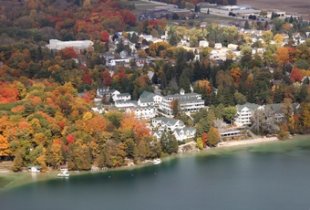
America's Coolest Small Towns: Elkhart Lake, Wisconsin
America's Coolest Small Towns, 2013
Elkhart Lake, Wisc.
(Photo: Courtesy Elkhart Lake)
(Population: 967)
You might say Elkhart Lake runs on two speeds: adrenaline-pumping fast and good-ol'-days calm. Just outside of town, in the Kettle Moraine State Forest, speedsters can find Road America, a four-mile off-road race circuit built in the 1950s where racers have been known to pass the 200 mph mark.
But back around the lake—crystal blue, spring-fed, cedar-lined, and 120-feet deep—the pace is decidedly more relaxed. At the three lakeside Victorian-era resorts, activities such as pontoon boating, wakeboarding, and summer bonfires will call to mind those long-lost memories of summer camp.
Elkhart Lake, Wisc.
(Photo: Courtesy Elkhart Lake)(Population: 967)
You might say Elkhart Lake runs on two speeds: adrenaline-pumping fast and good-ol'-days calm. Just outside of town, in the Kettle Moraine State Forest, speedsters can find Road America, a four-mile off-road race circuit built in the 1950s where racers have been known to pass the 200 mph mark.
But back around the lake—crystal blue, spring-fed, cedar-lined, and 120-feet deep—the pace is decidedly more relaxed. At the three lakeside Victorian-era resorts, activities such as pontoon boating, wakeboarding, and summer bonfires will call to mind those long-lost memories of summer camp.
Sunday, March 17, 2013
Saturday, March 16, 2013
Brewing Up An Inflated Impact
Major League Baseball recently released a study claiming a large economic impact due to Miller Park. Distant Brewers Fans Have $263 Million Annual Economic Impact.
A link to the study is not included in the article, nor could I find a copy of the study on the Institute for Survey & Policy Research's website.
[Coincidentally, this comes alongside the push for a new Milwaukee basketball arena.]
For starters, the study claims over 45% of fans come from outside the five-county Milwaukee metropolitan area. Yet, as I wrote in April 2012, "The UWM-Center for Economic Development notes in a study of another one of the Milwaukee development community's white elephants (PabstCity), "No venue in Milwaukee draws anything close to 30 percent of its visitors from outside the region. The Calatrava, with all its national and international publicity and iconic status, draws substantially less than 30% of its visitors from outside Milwaukee. Events such as the Wisconsin State Fair and Summerfest draw close to that figure, but these are once a year “special events,” with state-wide and civic participation and sponsorship."
Another odd caveat mentioned in the article, "The study did not consider spending by fans within the five-county metropolitan area in summarizing the economic impact of Miller Park. The reason is something economists call the "substitution effect," or the argument that local fans would be spending their money on other entertainment if the Brewers were not here."
When we're trying to decipher the economic impact a sport facility has on a region, you want to make sure you don't consider how the spending patterns of the majority of attendees affect other businesses in the area. WTF?
Next, we find that, "In estimating economic contributions of fan spending, Leib said the UW-Milwaukee study team used a reasonable multiplier of 2.1, though he usually does not use a multiplier higher than 2. This means that for every $1 spent by a distant fan, the study multiplied it by 2.1, arriving at an impact of $2.10 in the regional economy. This summarizes how many more times - 2.1 - that dollar is spent in the region, according to Leib."
So, multipliers are usually under 2, but in this case, for some unexplained reason, a higher multiplier was used. Hmmm, I wonder why.
Dennis Coates and Brad Humphreys found, "The multiplier for spending on sports in a city may be substantially smaller than the multiplier on other forms of entertainment spending, perhaps the most plausible explanation. The majority of the revenues from professional sports go into salaries for players, managers, coaches, trainers, scouts and to income for the ownership. Most of these individuals, especially the more highly paid ones, do not live full time in the city where the games take place. Unlike the wages and salaries paid to employees of local restaurants, movie theaters, car dealerships, department stores, etc., the large salaries earned by players and coaches leak out of the local economy."
Here, again, we have the media proclaiming quantitative evidence of a substantial impact from sport stadiums by merely regurgitating the bullet points of the latest "study." But upon further inspection, this "study" can hardly be taken seriously.
It was also disappointing (although expected at this point) to see that the Journal Sentinel didn't even attempt to find a few counterpoints to interview for the article. Onward with the media-enabled corporate welfare bonanza.
A link to the study is not included in the article, nor could I find a copy of the study on the Institute for Survey & Policy Research's website.
[Coincidentally, this comes alongside the push for a new Milwaukee basketball arena.]
For starters, the study claims over 45% of fans come from outside the five-county Milwaukee metropolitan area. Yet, as I wrote in April 2012, "The UWM-Center for Economic Development notes in a study of another one of the Milwaukee development community's white elephants (PabstCity), "No venue in Milwaukee draws anything close to 30 percent of its visitors from outside the region. The Calatrava, with all its national and international publicity and iconic status, draws substantially less than 30% of its visitors from outside Milwaukee. Events such as the Wisconsin State Fair and Summerfest draw close to that figure, but these are once a year “special events,” with state-wide and civic participation and sponsorship."
Another odd caveat mentioned in the article, "The study did not consider spending by fans within the five-county metropolitan area in summarizing the economic impact of Miller Park. The reason is something economists call the "substitution effect," or the argument that local fans would be spending their money on other entertainment if the Brewers were not here."
When we're trying to decipher the economic impact a sport facility has on a region, you want to make sure you don't consider how the spending patterns of the majority of attendees affect other businesses in the area. WTF?
Next, we find that, "In estimating economic contributions of fan spending, Leib said the UW-Milwaukee study team used a reasonable multiplier of 2.1, though he usually does not use a multiplier higher than 2. This means that for every $1 spent by a distant fan, the study multiplied it by 2.1, arriving at an impact of $2.10 in the regional economy. This summarizes how many more times - 2.1 - that dollar is spent in the region, according to Leib."
So, multipliers are usually under 2, but in this case, for some unexplained reason, a higher multiplier was used. Hmmm, I wonder why.
Dennis Coates and Brad Humphreys found, "The multiplier for spending on sports in a city may be substantially smaller than the multiplier on other forms of entertainment spending, perhaps the most plausible explanation. The majority of the revenues from professional sports go into salaries for players, managers, coaches, trainers, scouts and to income for the ownership. Most of these individuals, especially the more highly paid ones, do not live full time in the city where the games take place. Unlike the wages and salaries paid to employees of local restaurants, movie theaters, car dealerships, department stores, etc., the large salaries earned by players and coaches leak out of the local economy."
Here, again, we have the media proclaiming quantitative evidence of a substantial impact from sport stadiums by merely regurgitating the bullet points of the latest "study." But upon further inspection, this "study" can hardly be taken seriously.
It was also disappointing (although expected at this point) to see that the Journal Sentinel didn't even attempt to find a few counterpoints to interview for the article. Onward with the media-enabled corporate welfare bonanza.
Weekend Reading
Austerity Kills Government Jobs As Cuts To Budgets Loom
Corporate Wellness Programs: Not Quite The Cost Savers
The Fanatic, Fraudulent Mother Teresa
Lost Decade Not Over For 401(k)s, IRAs
Morning Joe's Accuracy Deficit
Shocked, Shocked, Over Hospital Bills
The U.S. Economy Really Needs A $ 2 Trillion Stimulus
U.S. Power Grid Is Getting Pricier, Less Reliable
Voucher Madness
Corporate Wellness Programs: Not Quite The Cost Savers
The Fanatic, Fraudulent Mother Teresa
Lost Decade Not Over For 401(k)s, IRAs
Morning Joe's Accuracy Deficit
Shocked, Shocked, Over Hospital Bills
The U.S. Economy Really Needs A $ 2 Trillion Stimulus
U.S. Power Grid Is Getting Pricier, Less Reliable
Voucher Madness
Monday, March 11, 2013
Opaque & Premature: Meet Milwaukee County Government
The Journal Sentinel reports:
So, what's the rush? The audit may even support Board pay cuts, it could also reveal other efficiencies and/or needed improvements. What doesn't Abele want the public to see? Why does this idea need to be fast-tracked?
18 supervisors (making roughly $50,000 annually) and their staff cost $6.5 million per year, in a budget of over $1.3 billion, which is less than one percent of the total budget.
County Executive Chris Abele on Monday vetoed an attempt by the County Board to seek a state or independent audit of county government...
Some supervisors have called for a broader review of county government, saying a greater range of efficiency moves should be considered.
Abele described the audit attempt as a delaying tactic.A delaying tactic ... um, duh! It's been proposed that a whole department's workforce be part-timed and/or terminated. Most would prefer to either avoid or delay unemployment. And, as far as efficiencies or bang-for-the-buck savings go, there might be other, better options available. The kind of thing that could be discovered and quantified by performing an audit.
So, what's the rush? The audit may even support Board pay cuts, it could also reveal other efficiencies and/or needed improvements. What doesn't Abele want the public to see? Why does this idea need to be fast-tracked?
18 supervisors (making roughly $50,000 annually) and their staff cost $6.5 million per year, in a budget of over $1.3 billion, which is less than one percent of the total budget.
Friday, March 8, 2013
Income Mobility & Inequality
Gini index measures the extent to which the distribution of income or consumption expenditure among individuals or households within an economy deviates from a perfectly equal distribution. A Lorenz curve plots the cumulative percentages of total income received against the cumulative number of recipients, starting with the poorest individual or household. The Gini index measures the area between the Lorenz curve and a hypothetical line of absolute equality, expressed as a percentage of the maximum area under the line. Thus a Gini index of 0 represents perfect equality, while an index of 100 implies perfect inequality. [source]
[source]
Income inequality can be measured and compared using something called the Gini coefficient, a century-old formula that measures national economies on a scale from 0.00 to 0.50, with 0.50 being the most unequal. The Gini coefficient is reliable enough that the CIA world factbook uses it. Here's a map of their data, with the most unequal countries in red and the most equal in green...The U.S., in purple with a Gini coefficient of 0.450, ranks near the extreme end of the inequality scale. Looking for the other countries marked in purple gives you a quick sense of countries with comparable income inequality, and it's an unflattering list: Cameroon, Madagascar, Rwanda, Uganda, Ecuador. A number are currently embroiled in or just emerging from deeply destabilizing conflicts, some of them linked to income inequality: Mexico, Côte d'Ivoire, Sri Lanka, Nepal, Serbia. Perhaps most damning is China, significantly more equal than the U.S. with a Gini coefficient of 0.415. [source]
The U.S Income Distribution & Income Mobility
6.35 Million Jobs Added In Last Three Years
Today’s report from the Bureau of Labor Statistics (BLS) shows that private sector businesses added 246,000 jobs in February. Total non-farm payroll employment rose by 236,000 jobs last month. The economy has now added private sector jobs every month for three straight years, and a total of 6.35 million jobs have been added over that period. [source]
Sunday, March 3, 2013
About The Residency Requirement Stifling Potential Job Applicants...
Huge Crowd Turns Out For MPS Teaching Jobs
School district officials estimate more than 1,000 job candidates turned out hoping to land one of the roughly 700 teaching job openings for the next school year in a district that recently bumped its starting teacher pay up from $37,721 to $41,000.
The Odd Couple: Scott Walker & Public Policy
The playbook is still the same, Scott Walker's Budget To Lower Income Tax Rates, Freeze Local Aid.
As suspected, Much Of The Savings From Scott Walker's Proposed Cut Would Go To The Top 20%.
How does Scott Walker plan on paying for this? Walker's Massive Borrowing Scheme.
Large tax cuts for the wealthy don't improve economic growth nor do they cause these same rich people to move to avoid such taxation. The Myth Of The Rich Who Flee From Taxes.
In fact, austerity - cutting budgets and spending, especially during our present sluggish economy- tends to make matters worse. Budget Cuts Seen As Risk To Growth Of The U.S. Economy.
So, what do we get for all this austerity, cutting, slashing, and freezing. Average Income Tax Cut Under Governor Walker Budget: $83.
Are these measures, at least, creating jobs? States' Private Sector Job-Creation Slowed, Census Data Shows.
As suspected, Much Of The Savings From Scott Walker's Proposed Cut Would Go To The Top 20%.
How does Scott Walker plan on paying for this? Walker's Massive Borrowing Scheme.
Large tax cuts for the wealthy don't improve economic growth nor do they cause these same rich people to move to avoid such taxation. The Myth Of The Rich Who Flee From Taxes.
In fact, austerity - cutting budgets and spending, especially during our present sluggish economy- tends to make matters worse. Budget Cuts Seen As Risk To Growth Of The U.S. Economy.
So, what do we get for all this austerity, cutting, slashing, and freezing. Average Income Tax Cut Under Governor Walker Budget: $83.
Are these measures, at least, creating jobs? States' Private Sector Job-Creation Slowed, Census Data Shows.
Saturday, March 2, 2013
Boundless Republican Delusion
I continue to be amused by all of Scott Walker's talk of job creation. In a recent Journal Sentinel article, Walker drones on about his bold moves, his concern with economic development and job creation, how he wants everyone to get along, how he never points fingers, his opposition to the Milwaukee streetcar and an assault weapons ban, and how Milwaukee will eventually thank him for his visionary work.
In Wisconsin, we've actually seen jobs leaving, millions in disinvestment, and some of the worst job growth among all the states. But, for Walker, this is streamlining processes and improving the economic climate and quality of life. Yes, because when the opposite of what you claimed was supposed to happen is happening, Walker thinks his plan is still on track, things are going as planned, and the people will be thankful. Republican delusion has no bounds.
"I'm a friend of the taxpayers, I'm a friend of the people, I'm a friend of the job creators," Walker said during a wide-ranging interview with Journal Sentinel editors and reporters. He added that even though he is not aligned politically with some city leaders, "in the end, the people in Milwaukee will fare better because of my tenure as governor, hands down."
He added, "I'd spend more time focusing on helping develop jobs and improving the (economic) climate, streamline the processes, as opposed to picking battles at either the state or federal level . . . finding ways to invest particularly in corridors where there is high unemployment."Luckily, Patrick Curley, the Mayor's chief of staff, was able to respond:
Barrett did not respond to a request for comment, but Patrick Curley, his chief of staff, issued a statement. Curley said he was happy to hear the governor was in Milwaukee, adding that he hoped Walker had toured the Amani, Metcalfe Park and Washington Park neighborhoods. Those three north side neighborhoods have been hit hard by the foreclosure crisis and violent crime.
"There he would see neighborhoods hit hard by foreclosures, an issue he continues to ignore," Curley said.
"It would have been great if he had gone a bit further north to see the old Tower Automotive site (where the Talgo train factory sits) because that's an area that we have invested millions in and would certainly appreciate an infusion of his promised Transform Milwaukee funds."Yes, I'm sure Milwaukee is very happy that Walker has diverted federal funds for foreclosure to the general account so Walker can spend it as he wants rather than on what the money was intended for - foreclosures. Walker's refusal of other federal funding, which killed millions in investment and has caused the train manufacturer Talgo to leave town (and they're also suing the state), also doesn't bode well for jobs and economic development. And, don't forget the millions in state aid that has been stripped from Milwaukee in Walker's recent budgets. Sure, what better way to ignite growth than to cut the economic engine of the state - Milwaukee - off at the knees.
In Wisconsin, we've actually seen jobs leaving, millions in disinvestment, and some of the worst job growth among all the states. But, for Walker, this is streamlining processes and improving the economic climate and quality of life. Yes, because when the opposite of what you claimed was supposed to happen is happening, Walker thinks his plan is still on track, things are going as planned, and the people will be thankful. Republican delusion has no bounds.
Residency Requirements: Reading & Facts
In Milwaukee, city officials are expected to vigorously contest the governor's effort to end the city's 75-year-old residency law.
Barrett said the effort to end the residency law and the freeze on state aid come at the same time as the city continues to struggle with the ongoing foreclosure crisis. The city is now the largest residential property owner in Milwaukee because of tax foreclosures and has hundreds of homes it says it must raze because they've become magnets for crime.
"There are many homeowners in parts of the city who are currently underwater in their mortgages," Barrett said. "And what this will do is put more downward pressure on property values in the city of Milwaukee."
The city will argue that the ability of Wisconsin cities, towns and villages to determine their own affairs via home rule is outlined in the state Constitution and in state law.
They also will be expected to cite a U.S. Supreme Court ruling from 1976 in which the high court upheld Philadelphia's residency rule. In that case, the court said the law did not violate the due process clause, the equal protection clause or the right to travel interstate.
The issue, at least for the mayor and other top officials, is an issue of local control and say that should appeal to Republicans.
Moreover, the city has argued that the residency law has never impeded the city's ability to retain employees. According to city records, the voluntary separation rate in the city was 1.2% or 83 resignations in 2010. That's out of a city payroll of 6,846 part- and full-time workers.
The city also is a magnet for candidates for the police and fire departments. Even with a residency law in place, the city received 5,743 applications for firefighter jobs in the most recent recruiting period and 3,691 applications for police officer.How To Crush Milwaukee
As for those cities who ended the requirement, the survey found, Minneapolis repealed the requirement in 1999 and 70 percent of its employees now live outside the city. Detroit did so in 1999 and 45 percent now live outside the city. Baltimore repealed in 1995 and 65 percent now live outside the city. Huge numbers of government employees also left St. Louis and Washington D.C. after residency rules were relaxed.
Based on these figures and the fact that in Milwaukee, 50 percent of its retired employees now now live outside the city, Milwaukee officials estimate that it would lose about half of its employees — some 8,700 middle class residents — to the suburbs. Compared to other residents, city employees are more likely to own their homes, homes that on average are worth 20 percent more in assessed value than those of other residents.
The city, in short, would lose a big chunk of its middle class. Housing values and the property tax base could tumble as a result, and spending in the city could decline, hurting businesses and the city’s overall economy. The exodus could transform neighborhoods like Jackson Park, where many police live, or the areas near the airport or far Northwest Side, where many city employees live.
Supporters of ending the residency requirement have argued this will enable the city to hire better employees. But city statistics show there are 42 applications for the average job. In its most recent recruitments, the city received 5,711 applications for the position of fire fighter and 3,569 for the position of police officer.
Walker in particular has argued that ending the residency requirement will help Milwaukee Public Schools to hire better teachers. But a 2006 study by the conservative Wisconsin Policy Research Institute found residency did not have a major impact: just five percent of the 4,699 teachers who had left MPS since 1992 did so because of the requirements. Even so, the Milwaukee School Board has passed a recent measure to address the issue, giving teachers hired for hard-to-fill positions up to two years to move into the city.
The ability of Wisconsin municipalities to tinker with such rules and determine their local affairs is spelled out in the state constitution. Milwaukee’s employees have been subject to a residency requirement since 1938. Is Walker suggesting Milwaukee hasn’t been a great city for the last 75 years? And why would Republicans who support local control change their stance in this instance?
Sykes and others have argue this is a matter of personal freedom. But these employees are free to seek other jobs at any time. And their unions have long had the option of taking less wage and benefits increases in return for ending residency, and declined. Twice in recent years the police and fire unions made a wage concession to end residency and the arbitrator (whom Republicans have often complained tend to favor unions) ruled that the offer was inadequate.
Police and fire workers often grumble about property taxes in Milwaukee, which are higher than many surrounding suburbs. But the major reason for that is the wages and benefits they are paid, which accounts for 60 percent of the entire city operating budget.Since unions are no longer recognized and collective bargaining a thing of the past, thanks to Walker's Act 10, and since other long-standing rules, it appears, are free to be thrown out the window, what's to keep the City from completely reworking police and firefighter pay? As the number of applicants for those positions illustrates, there are plenty of people willing to live in the City to obtain police and fire fighter jobs.
So, turnabout being fair play and all that, what better way to save money in the City budget than by cutting the largest cost, police and fire fighters pay packages. If a police officer, a fire fighter or any other public worker doesn't like the residency requirement, he or she is free to live in another location of his/her liking and to apply for a job somewhere else.
[source]
In his first expansive comments on his plan, Walker rejected Barrett's charge that the governor was rewarding the Milwaukee Police Association and the Milwaukee Professional Firefighters Association Local 215 in return for their political support, saying he had favored ending residency rules when he served in the Assembly. However, as a candidate for county executive in 2002, Walker said he supported the county's residency requirement, though he said Sunday he did so because he felt the County Board wasn't going to change it.
But Barrett said in a statement Sunday that the city was not facing the same issue MPS faces. "The city has thousands of individuals who apply to be city firefighters or police officers," Barrett said. "These applicants are screened, undergo written, physical and psychological testing. They are offered employment based on merit. If the governor believes that only city residents are eligible to apply for city employment, he is wrong. Individuals who apply for employment with the city are informed that, if offered employment, they will have to reside in the city. No one is hired based on where they live at the time a job offer is made."
Barrett said no one's personal freedom was being violated. "People are free to apply for a job and are free to accept the job at the time an offer of employment is made," Barrett said. "If this is an oppression of freedom, then why do we get thousands of applications? The governor's rationale doesn't hold up and doesn't make sense."Remember during Walker's campaigning, he pushed the idea of overpaid public employees. Public workers were a major cause of Wisconsin's (supposed) budget crisis. So, it seems odd when he now says, "Nobody who's a public servant has enough money to just walk away from their home. They're going to sell it. If they do choose to sell . . . they're going to want to cover the amount that they've invested, that they put into that home. So the argument that property values are just suddenly going to shift I don't think matches up with reality."
Got that? Now, to support his political payback to the police and fire unions, suddenly Walker believes public workers are too poor and underpaid to afford taking any type of loss in selling their homes.
For Further Reading:
Attack On Residency Continues Governor's "Divide & Conquer" Strategy
Subscribe to:
Posts (Atom)