Rick Barrett informs, Impending Military Cuts Could Cost Wisconsin 11,000 Jobs.
Luckily, public sector jobs aren't real jobs (according to Republicans), so it doesn't matter.
For Further Reading:
Threats From Mounting Public Job Losses
Unemployment Rate Without Government Cuts: 1%
Sunday, July 29, 2012


The Water Is Right Here
The Milwaukee Journal Sentinel has been critical of the City's dealings with Waukesha over diverting Lake Michigan water for Waukesha's "needs". This is another example of the Journal's approach to economic development - Just Do It! (Nevermind The Consequences).
Why should these naturally-advantaged locations [water] continue to subsidize and enable sprawling development, and their own decline, because of these suburban sprawlers' "needs"?
Isn't this exactly how those free-market Waukesha conservatives live their lives? Water is expensive because it's, more so, becoming a finite and localized resource. Supply and demand. What is the reasoning behind providing such water welfare to Waukesha?
Funny how such strongly held principles and world-views are so pliable when the advantage is in someone else's hands.
Just as those in Waukesha have been so helpful in promoting rail in the area. Or as they have been so helpful in employing inner-city residents with their suburban employment expansion over the past few decades.
Suddenly, sharing (socialist!) policies make good economic sense.
Work Until You're Dead
Christian Schneider, of the Journal Sentinel and WPRI, advises, Take It Slow On Pension Changes. This isn't the first time the Journal has allowed right-wing hacks to vilify and lead the way toward making our retirements more volatile.
But this begs the question, why make changes at all?
Wisconsin has the best - most solvent - pension system in the country.
Rather than taking it slow, better yet, leave it alone.
For Further Reading:
Deferred Wages
More Bad Pension Reporting
Pension & Retirement Reading
Pension Petulance
Politicking With Pensions
Recoiling Retirement
Retirement Revisionists
But this begs the question, why make changes at all?
Wisconsin has the best - most solvent - pension system in the country.
Rather than taking it slow, better yet, leave it alone.
For Further Reading:
Deferred Wages
More Bad Pension Reporting
Pension & Retirement Reading
Pension Petulance
Politicking With Pensions
Recoiling Retirement
Retirement Revisionists
Government Is A Bargain
Excerpt:
"Few consumers have noticed, but the federal government has essentially been on sale, with taxpayers paying about 20 percent less than they used to for what Washington does. Yet unlike satisfied customers, taxpayers are increasingly fed up with the government they finance. This could make them downright surly when the price of government goes back up, which is a near certainty over the next few years.
A new report published by the Congressional Budget Office shows that the average household paid 17.4 percent of its income to the federal government in the form of taxes in 2009, the latest data available.
That's the lowest tax burden on record. It's about 20 percent lower than the federal tax burden in 1979, when the CBO's data series began.
Government services, instead of falling in proportion to the amount of revenue Washington takes in, have instead expanded.
Over the last few years, in fact, taxpayers have been getting the best deal in modern times, in terms of what they get from the government, and what they pay for it.
The bigger point, however, is that the federal tax burden has been falling at every income level."
"Few consumers have noticed, but the federal government has essentially been on sale, with taxpayers paying about 20 percent less than they used to for what Washington does. Yet unlike satisfied customers, taxpayers are increasingly fed up with the government they finance. This could make them downright surly when the price of government goes back up, which is a near certainty over the next few years.
A new report published by the Congressional Budget Office shows that the average household paid 17.4 percent of its income to the federal government in the form of taxes in 2009, the latest data available.
That's the lowest tax burden on record. It's about 20 percent lower than the federal tax burden in 1979, when the CBO's data series began.
Government services, instead of falling in proportion to the amount of revenue Washington takes in, have instead expanded.
Over the last few years, in fact, taxpayers have been getting the best deal in modern times, in terms of what they get from the government, and what they pay for it.
The bigger point, however, is that the federal tax burden has been falling at every income level."
NOT Fannie, Freddie, the CRA, Nor The Poor
Republicans have been somewhat successful in diffusing the idea that Fannie Mae, Freddie Mac, the Community Reinvestment Act, and poor people were responsible for the housing bubble. Thus, Republicans are winning some elections, and our casino capitalism is still running amok.
Yet Ned Gramlich, of the Federal Reserve, found, "Banks have made many low- and moderate-income mortgages to fulfill their CRA obligations, they have found fault rates pleasantly low, and they generally charge low mortgage rates. Thirty years later, CRA has become very good business." Russel Kroszner, also of the Federal Reserve, states, "Contrary to the assertions of critics, the evidence does not support the view that the CRA contributed in any substantial way to the crisis in the subprime mortgage market."
For Further Reading:
Yet Ned Gramlich, of the Federal Reserve, found, "Banks have made many low- and moderate-income mortgages to fulfill their CRA obligations, they have found fault rates pleasantly low, and they generally charge low mortgage rates. Thirty years later, CRA has become very good business." Russel Kroszner, also of the Federal Reserve, states, "Contrary to the assertions of critics, the evidence does not support the view that the CRA contributed in any substantial way to the crisis in the subprime mortgage market."
As Paul Krugman explained, "The Community Reinvestment Act of 1977 was irrelevant to the subprime boom, which was overwhelmingly driven by loan originators not subject to the Act...During those same years [the middle years of the naughties], Fannie and Freddie were sidelined by Congressional pressure, and saw a drop in their share of securitization."
Neil Bhutta and Glenn B. Canner discovered, "The small share of subprime lending in 2005 and 2006 that can be linked to the CRA suggests it is very unlikely the CRA could have played a substantial role in the subprime crisis."
Kenneth Cooper notes, "In his new study on racial-ethnic lending patterns, Jourdain-Earl finds that Federal Reserve data show that 84 percent of mortgages purchased by Fannie Mae and Freddie Mac between 2004 and 2009 had been made to whites, with 8 percent going to Hispanics and 5 percent to African-Americans. For loans to comply with CRA, 68 percent went to whites, 15 percent to Hispanics and 12 percent to African-Americans—hardly enough volume from minorities to cause the housing crisis."
"Overall, loans originated for private-label securitization have defaulted at about six times the rate of Fannie and Freddie loans," informs David Min.
"Overall, loans originated for private-label securitization have defaulted at about six times the rate of Fannie and Freddie loans," informs David Min.
For Further Reading:
The definitive debunking of the "CRA, Fannie, Freddie, and the poor are at fault" claims can be read in Why Wallison Is Wrong About The Genesis Of The U.S Housing Crisis.
Ruinous Wall Street
"Plus, there's the fact that the entire industry continues to get preferential treatment from the government -- be it the $700 billion bailout in 2008 or the ongoing right to borrow massive amounts of essentially free money from the Federal Reserve, then turn around and loan it, risk free, to Uncle Sam at 1.5% or more per year, thus pocketing billions in easy money," reports Anthony Mirhaydari.


Saturday, July 28, 2012
The Missing Link
It's good to (finally) see the Journal Sentinel clutching onto Richard Longworth's promotion of a more regional governance between Milwaukee and Chicago, and amongst other regional cities. But how long will this latest fascination last? Lip service (or should I say ink) to regionalism has flippantly been given by the Journal in the past.
Sadly, such communal (dare I say socialist) conceptions of government - cooperation for the benefit of the whole - whereby decisions are made with a broader concern have been brushed aside for decades by political and business leaders alike.
In 1992, looking at the potential positive regional impact from light rail transit (LRT), Marc Levine, professor of history and urban studies at UWM, found, "The UWMCED study concludes that, although the economic benefits of LRT should not be oversold and will require supportive public policies to be fully realized, a light rail system could contribute significantly to economic development in the city of Milwaukee and the entire region."
Levine, in reporting on Milwaukee's inner city in 2006, stated, "As a consequence of these trends, income inequality in metropolitan Milwaukee deepened last year, as the inner city fell further behind other areas of the region... These are massive income gaps that have widened considerably since 1990 and signify deep economic polarization in the region. “Regionalism” has become the new buzzword among city and corporate leaders, but, so far at least, there has been little indication that these leaders are prepared to implement the kinds of regional equity policies –in transportation, tax-base sharing, or growth management—that other communities have used to attack regional economic disparities."
In 2008, Levine proposed, "The region’s corporate leaders, represented by the Metropolitan Milwaukee Association of Commerce and the Greater Milwaukee Committee, supposedly support regional rail transit. If that’s true, they should make it the centerpiece of the Milwaukee 7 initiative, turning it into a more muscular regionalism that could underpin an economic revitalization of the city and region."
And, other voices have been calling for more regional approaches to governance for decades. Suddenly the Journal Sentinel is on board. Better late than never, I guess.
The problem is that by opposing rail (and other more regional - cooperative - policies), the Journal Sentinel has stymied progress on the very issue they suddenly see as a no-brainer. Rail would-have-been an catalyst for infrastructure, jobs, and an improved regional linkage. It would have been one of the biggest investments in the region in a generation or more.
The Journal Sentinel goose-stepped right along with Scott Walker and his plan to refuse funding for rail expansion in the region.
Milquetoast coverage and the occasional blip regarding a "regional" solution to the issue-of-the-moment is not full-throated support for regionalism nor meaningfully helpful in bringing regional governance, as a topic, to the forefront.
It's hard to claim to be for the region when one supports policies that prevent the region from more efficiently linking together and growing.
Sadly, such communal (dare I say socialist) conceptions of government - cooperation for the benefit of the whole - whereby decisions are made with a broader concern have been brushed aside for decades by political and business leaders alike.
In 1992, looking at the potential positive regional impact from light rail transit (LRT), Marc Levine, professor of history and urban studies at UWM, found, "The UWMCED study concludes that, although the economic benefits of LRT should not be oversold and will require supportive public policies to be fully realized, a light rail system could contribute significantly to economic development in the city of Milwaukee and the entire region."
Levine, in reporting on Milwaukee's inner city in 2006, stated, "As a consequence of these trends, income inequality in metropolitan Milwaukee deepened last year, as the inner city fell further behind other areas of the region... These are massive income gaps that have widened considerably since 1990 and signify deep economic polarization in the region. “Regionalism” has become the new buzzword among city and corporate leaders, but, so far at least, there has been little indication that these leaders are prepared to implement the kinds of regional equity policies –in transportation, tax-base sharing, or growth management—that other communities have used to attack regional economic disparities."
In 2008, Levine proposed, "The region’s corporate leaders, represented by the Metropolitan Milwaukee Association of Commerce and the Greater Milwaukee Committee, supposedly support regional rail transit. If that’s true, they should make it the centerpiece of the Milwaukee 7 initiative, turning it into a more muscular regionalism that could underpin an economic revitalization of the city and region."
And, other voices have been calling for more regional approaches to governance for decades. Suddenly the Journal Sentinel is on board. Better late than never, I guess.
The problem is that by opposing rail (and other more regional - cooperative - policies), the Journal Sentinel has stymied progress on the very issue they suddenly see as a no-brainer. Rail would-have-been an catalyst for infrastructure, jobs, and an improved regional linkage. It would have been one of the biggest investments in the region in a generation or more.
The Journal Sentinel goose-stepped right along with Scott Walker and his plan to refuse funding for rail expansion in the region.
Milquetoast coverage and the occasional blip regarding a "regional" solution to the issue-of-the-moment is not full-throated support for regionalism nor meaningfully helpful in bringing regional governance, as a topic, to the forefront.
It's hard to claim to be for the region when one supports policies that prevent the region from more efficiently linking together and growing.
The Good Government Does, Yet Another Example
I just received a letter from my health insurance provider.
The Affordable Care Act ("Obamacare") requires insurance companies to rebate part of the premiums it receives if it does not spend at least 85 percent of the premiums on health care services.
In this case, they only spent 84 percent, thus they have to rebate 1 percent of the total health insurance premiums paid the the employer and employees in the group health plan.
Yet another example of how President Obama's health reforms are actually working. Many would have preferred universal coverage - Medicare for all. But at least we're headed in the right direction.

The alternative is continuing to pay comparatively outrageous fees for our health care while receiving no better care, and also having to deal with the millions of citizens that otherwise would be without any health care coverage (other than emergency rooms, which cost even more).
 [source]


 [source]
What do Republicans want? What is their alternative, better plan? "Obamacare" seems to work. What are they opposed to?
Update:
Hmmm, so rising health care costs are the fault of Medicare/Medicaid, Health Maintenance Organizations, socialism, and the government, in general (according to a commenter).
How can nearly every other developed country in the world provide better quality health care, at half the cost, in what are much more "socialized" systems than ours? The answer isn't more "market," it's less. Medicare already controls costs better than the private sector. Removing private insurers and their greed from the equation would bring American health care costs in-line with the rest of the world.
Markets work nicely for socks and widgets, but not so much for health care. For you, "Anonymous," read and learn:
Why We Need An Individual Mandate For Health Care
Why Markets Can't Cure Health Care
Uncertainty & The Welfare Economics Of Medical Care
The Market For Lemons
The Affordable Care Act ("Obamacare") requires insurance companies to rebate part of the premiums it receives if it does not spend at least 85 percent of the premiums on health care services.
In this case, they only spent 84 percent, thus they have to rebate 1 percent of the total health insurance premiums paid the the employer and employees in the group health plan.
Yet another example of how President Obama's health reforms are actually working. Many would have preferred universal coverage - Medicare for all. But at least we're headed in the right direction.

The alternative is continuing to pay comparatively outrageous fees for our health care while receiving no better care, and also having to deal with the millions of citizens that otherwise would be without any health care coverage (other than emergency rooms, which cost even more).


What do Republicans want? What is their alternative, better plan? "Obamacare" seems to work. What are they opposed to?
Update:
Hmmm, so rising health care costs are the fault of Medicare/Medicaid, Health Maintenance Organizations, socialism, and the government, in general (according to a commenter).
How can nearly every other developed country in the world provide better quality health care, at half the cost, in what are much more "socialized" systems than ours? The answer isn't more "market," it's less. Medicare already controls costs better than the private sector. Removing private insurers and their greed from the equation would bring American health care costs in-line with the rest of the world.
Markets work nicely for socks and widgets, but not so much for health care. For you, "Anonymous," read and learn:
Why We Need An Individual Mandate For Health Care
Why Markets Can't Cure Health Care
Uncertainty & The Welfare Economics Of Medical Care
The Market For Lemons
Conflict Of Interest
Republicans Shorting Treasury Bonds, Would Profit From Government Defaults
If your job is to shape policies that benefit America (or at least not contribute to the U.S.'s insolvency), I'm sure you're not doing anything opposed to such, especially something to worsen the situation, even if your portfolio would benefit from those actions.
Truly great public servants.
If your job is to shape policies that benefit America (or at least not contribute to the U.S.'s insolvency), I'm sure you're not doing anything opposed to such, especially something to worsen the situation, even if your portfolio would benefit from those actions.
Truly great public servants.
Friday, July 27, 2012

Debt, Investment & America's Future
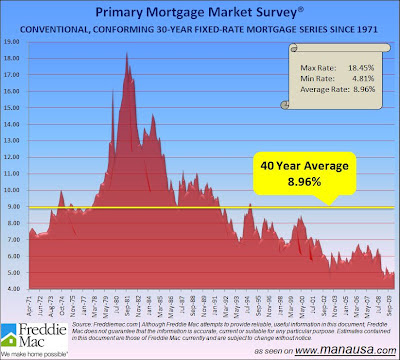
Debt, as a percentage of GDP, hasn't been this high since the Great Depression.
And?
Television personalities, pundits, supposed-experts, and other talking-heads are going on and on about how U.S. debt is dooming America.
Over the period following the Great Depression we heavily indebted ourselves to expand infrastructure, educate citizens, and to invest in our future...ending the Depression and moving America forward. From this period, with those large investments, the U.S. saw it's greatest period of prosperity and growth in our history. And, let me add, an income convergence. The middle class was created. The economy as a whole buzzed along, but rather than a select few taking most of the gains (like today), we enjoyed a shared prosperity where one breadwinner could support a family with a decent middle-class lifestyle (the American Dream); the boss made more, but not exponentially so, and the U.S. lifestyle and society were the envy of the world.
Schools, roadways, subdivisions, waterways, electrical grids, sewer systems, bridges ... almost every infrastructure, structural, and institutional entity embodying our national fabric - a majority of the things we now consider "the U.S." - were a direct result of those investments that were made to get out of the Depression.
 [graph]
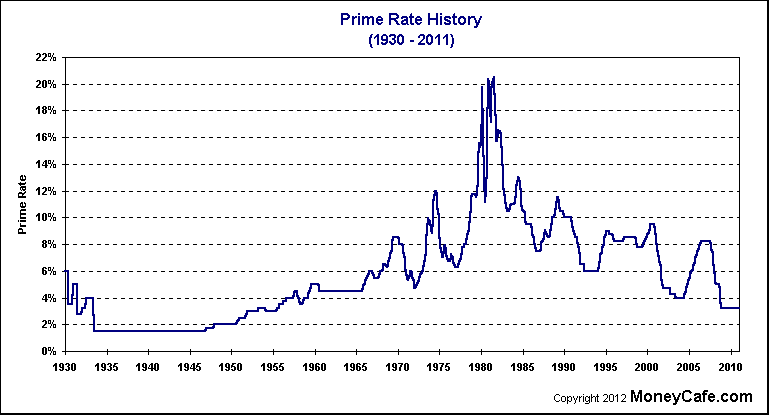
Interest rates are at historic lows. There is no better time to make infrastructure investments to propel us into another half-century of prosperity.

And?
Television personalities, pundits, supposed-experts, and other talking-heads are going on and on about how U.S. debt is dooming America.
Over the period following the Great Depression we heavily indebted ourselves to expand infrastructure, educate citizens, and to invest in our future...ending the Depression and moving America forward. From this period, with those large investments, the U.S. saw it's greatest period of prosperity and growth in our history. And, let me add, an income convergence. The middle class was created. The economy as a whole buzzed along, but rather than a select few taking most of the gains (like today), we enjoyed a shared prosperity where one breadwinner could support a family with a decent middle-class lifestyle (the American Dream); the boss made more, but not exponentially so, and the U.S. lifestyle and society were the envy of the world.
Schools, roadways, subdivisions, waterways, electrical grids, sewer systems, bridges ... almost every infrastructure, structural, and institutional entity embodying our national fabric - a majority of the things we now consider "the U.S." - were a direct result of those investments that were made to get out of the Depression.

Interest rates are at historic lows. There is no better time to make infrastructure investments to propel us into another half-century of prosperity.

Monday, July 23, 2012
Monday, July 16, 2012
More Republican Hypocrisy
As Michael McAuliff reports, "When Congress passed the health care law, it required members of Congress to get their insurance on exchanges with the rest of the public. But in voting to repeal that law, Republicans and a handful of Democrats were also voting to go back to the old system where the lawmakers get a sweeter deal than most of the rest of the country. They also voted against a Democratic motion that said members of Congress who support repealing the health care law must also repeal the good stuff they get, such as lifetime care and insurance regardless of pre-existing conditions."
"House Republicans refuse to admit they voted to give themselves taxpayer funded lifetime guaranteed health care instead of having the same health care as their constituents," said Jesse Ferguson, spokesman for the Democratic Congressional Campaign Committee, referring to the fact that members of Congress are eligible for retirement benefits after just five years. "House Republicans didn’t just vote to protect insurance company campaign donor profits this time, they’re even helping themselves to lifetime taxpayer-funded government health care and now they need to be honest with their constituents and admit it,” Ferguson said.
Saturday, July 14, 2012
Milwaukee: Open For Business
Who would have thought (considering its relatively small size and after listening to Scott Walker talk about how scary Milwaukee is) that Milwaukee is well-represented with Fortune 500 companies.

And, just as a reminder/primer on all the widely-known companies that just so happen to be from Wisconsin, here's a partial list:
- Johnson Controls
- Northwestern Mutual Life Insurance Co.
- Manpower Inc.
- Kohl's Corp.
- GE Healthcare
- American Family Insurance Co.
- S.C. Johnson & Sons Inc.
- Menard Inc.
- Harley-Davidson
- Rockwell Automation
- Roundy's Inc.
- Miller Brewing Co.
- Fiserv Inc.
- WE Energies
- ShopKo Stores Inc.
- Kohler Co.
- Briggs & Stratton Corp.
- Humana Insurance Co.
- Snap-On Inc.
- Land's End
- Aurora Health Care Inc.
- Quad/Graphics
- A.O. Smith Corp.
- Kwik Trip Inc.
- Famous Footwear
- Blue Cross & Blue Shield United
- Jockey International Inc.
- Sargento Foods Inc.
- Milwaukee Electric Tool Corp.
Mitt "O.G." Romney
Republicans have been beating on the idea that Unions are the worst. (Eyes off the 1%.) Yes, those unionized bastards living a seemingly middle-class lifestyle are living the high life. They are thugs...undeserving barbarians. Do-nothings living off the government teat.
Enter Mitt Romney.
Rachel Maddow has a great expose(s) on this O.G. The most outlandishly gangsta thug out there.
If we want to see an entitled, do-nothing slug living off the public teat (or the benefits obtained from politically buying such) look no further than Thug Romney.

Enter Mitt Romney.
Rachel Maddow has a great expose(s) on this O.G. The most outlandishly gangsta thug out there.

Prognosis Negative
It's about time. Walker M.D. is on the case.
We've been having an arduous debate over health care reform. Now that reform has passed and been solidified by the Supreme Court, Scott Walker has weighed in with his opinion of what the results will be for Wisconsin.
Yes, with his well-known expertise in health care economics, Walker foresees trouble ahead for Wisconsin and America. Yes, Mr. Walker's medical and economics degrees sure do come in handy in this situation. Oh, wait...
[Even Tommy Thompson (outfitted with a Harley motorcycle and all) is running campaign ads promising to repeal health care reform.]
Um, yeah, so this isn't really well-reasoned analysis pursued in the interest of what's best for citizens and their health care. This is the Republican party marching-orders. Repealing "Obama" care is a central theme for Republicans in the next election cycle. Everyone running as a Republican will be running ads and writing op-eds talking about how bad "Obama" care is and how they will save their constituents by overturning it.
In all the smoke and mirrors, one thing every citizen should remember is this: Republicans are interested in power NOT policy. They want to be the ones in charge, able to use the government to reward cronies and steer taxpayer dollars toward their pet projects. These aren't well-intentioned individuals concerned with the economy, health care, clean water, etc. In fact, Republicans direct opposition to every initiative the Democrats have proposed - which attempt to benefit the poor, the middle-class, workers, the elderly, etc. - should make it very clear that the Republicans aren't concerned with the welfare of the majority of citizens.
I had to laugh at Walker's article's statement, "The best place to see the effects of the law is in our nation's laboratories, the states." Having written this, one would then assume Mr. Walker was going to talk about Massachusetts, which developed the nation's only universal health coverage system six years ago. Nope, instead he rambled on about his own recently passed budget and all its mythical savings.
And, of course Walker had to insert the idea of people "becoming dependent on the government and taxpayers." Because whenever the government taxes, regulates, or does anything, in the view of Republicans, it's merely a roundabout path toward an increase in lay-abouts dependent on the government. Yes, health care reform is simply a nefarious idea to increase costs, according to the Republicans. Democrats want a centralized country (Socialists!) where do-nothings get all the breaks and the hard workers pay for it. Or, at least, this is the red-baiting tactic Republicans are claiming and counting on. Most Republicans are unaware the government spending already accounts for nearly half of all health care costs (43.6 percent of all health care spending in the U.S. in 2009).
As Paul Krugman explains, "Well, if having the government regulate and subsidize health insurance is a “takeover,” that takeover happened long ago. Medicare, Medicaid, and other government programs already pay for almost half of American health care, while private insurance pays for barely more than a third (the rest is mostly out-of-pocket expenses). And the great bulk of that private insurance is provided via employee plans, which are both subsidized with tax exemptions and tightly regulated."
Regarding the supposed cost increases Republicans are claiming due to health care reform, Jonathan Chait clarifies, "The Affordable Care Act spends a bunch of money to cover people who are too poor or sick to afford their own health care. To pay for that, it raises some taxes and cuts a bunch of spending from Medicare. The new revenue and the spending cuts outweigh the cost of the new spending, which is why the Congressional Budget Office projected it to reduce the deficit. Projections always have a margin for error attached, but the CBO’s two year update actually bumped up the savings projections a bit."
So, as usual, Republicans are living in an alternate (false) reality. The Affordable Care Act is actually predicted to decrease health care costs over time. Trying to control health care costs while covering more people is not a socialist plot, it is an attempt at a more cost-effective, moral and healthy society.
Government is us. And, it can do (and already does) many things very well for a majority of citizens. Don't let the Republicans try to convince you otherwise.
For Further Reading:
CBO Update Shows Lower Costs For Health Care Law
Uncertainty & The Welfare Economics Of Medical Care
We've been having an arduous debate over health care reform. Now that reform has passed and been solidified by the Supreme Court, Scott Walker has weighed in with his opinion of what the results will be for Wisconsin.
Yes, with his well-known expertise in health care economics, Walker foresees trouble ahead for Wisconsin and America. Yes, Mr. Walker's medical and economics degrees sure do come in handy in this situation. Oh, wait...
[Even Tommy Thompson (outfitted with a Harley motorcycle and all) is running campaign ads promising to repeal health care reform.]
Um, yeah, so this isn't really well-reasoned analysis pursued in the interest of what's best for citizens and their health care. This is the Republican party marching-orders. Repealing "Obama" care is a central theme for Republicans in the next election cycle. Everyone running as a Republican will be running ads and writing op-eds talking about how bad "Obama" care is and how they will save their constituents by overturning it.
In all the smoke and mirrors, one thing every citizen should remember is this: Republicans are interested in power NOT policy. They want to be the ones in charge, able to use the government to reward cronies and steer taxpayer dollars toward their pet projects. These aren't well-intentioned individuals concerned with the economy, health care, clean water, etc. In fact, Republicans direct opposition to every initiative the Democrats have proposed - which attempt to benefit the poor, the middle-class, workers, the elderly, etc. - should make it very clear that the Republicans aren't concerned with the welfare of the majority of citizens.
I had to laugh at Walker's article's statement, "The best place to see the effects of the law is in our nation's laboratories, the states." Having written this, one would then assume Mr. Walker was going to talk about Massachusetts, which developed the nation's only universal health coverage system six years ago. Nope, instead he rambled on about his own recently passed budget and all its mythical savings.
And, of course Walker had to insert the idea of people "becoming dependent on the government and taxpayers." Because whenever the government taxes, regulates, or does anything, in the view of Republicans, it's merely a roundabout path toward an increase in lay-abouts dependent on the government. Yes, health care reform is simply a nefarious idea to increase costs, according to the Republicans. Democrats want a centralized country (Socialists!) where do-nothings get all the breaks and the hard workers pay for it. Or, at least, this is the red-baiting tactic Republicans are claiming and counting on. Most Republicans are unaware the government spending already accounts for nearly half of all health care costs (43.6 percent of all health care spending in the U.S. in 2009).
As Paul Krugman explains, "Well, if having the government regulate and subsidize health insurance is a “takeover,” that takeover happened long ago. Medicare, Medicaid, and other government programs already pay for almost half of American health care, while private insurance pays for barely more than a third (the rest is mostly out-of-pocket expenses). And the great bulk of that private insurance is provided via employee plans, which are both subsidized with tax exemptions and tightly regulated."
Regarding the supposed cost increases Republicans are claiming due to health care reform, Jonathan Chait clarifies, "The Affordable Care Act spends a bunch of money to cover people who are too poor or sick to afford their own health care. To pay for that, it raises some taxes and cuts a bunch of spending from Medicare. The new revenue and the spending cuts outweigh the cost of the new spending, which is why the Congressional Budget Office projected it to reduce the deficit. Projections always have a margin for error attached, but the CBO’s two year update actually bumped up the savings projections a bit."
So, as usual, Republicans are living in an alternate (false) reality. The Affordable Care Act is actually predicted to decrease health care costs over time. Trying to control health care costs while covering more people is not a socialist plot, it is an attempt at a more cost-effective, moral and healthy society.
Government is us. And, it can do (and already does) many things very well for a majority of citizens. Don't let the Republicans try to convince you otherwise.
For Further Reading:
CBO Update Shows Lower Costs For Health Care Law
Uncertainty & The Welfare Economics Of Medical Care
Sunday, July 8, 2012
Wasteful Corporate Welfare
More corporate welfare is shown to be ineffective...
The Lincoln Institute of Land Policy's latest report, Rethinking Property Tax Incentives For Business, finds:
The use of property tax incentives for business by local governments throughout the United States has escalated over the last 50 years. While there is little evidence that these tax incentives are an effective instrument to promote economic development, they cost state and local governments $5 to $10 billion each year in forgone revenue.
Three major obstacles can impede the success of property tax incentives as an economic development tool. First, incentives are unlikely to have a significant impact on a firm’s profitability since property taxes are a small part of the total costs for most businesses—averaging much less than 1 percent of total costs for the U.S. manufacturing sector. Second, tax breaks are sometimes given to businesses that would have chosen the same location even without the incentives. When this happens, property tax incentives merely deplete the tax base without promoting economic development. Third, widespread use of incentives within a metropolitan area reduces their effectiveness, because when firms can obtain similar tax breaks in most jurisdictions, incentives are less likely to affect business location decisions.
Despite a generally poor record in promoting economic development, property tax incentives continue to be used. The goal is laudable: attracting new businesses to a jurisdiction can increase income or employment, expand the tax base, and revitalize distressed urban areas. In a best case scenario, attracting a large facility can increase worker productivity and draw related firms to the area, creating a positive feedback loop. This report offers recommendations to improve the odds of achieving these economic development goals.
Wisconsin Economic Development: Walker's Untraceable Slush Fund
What a novel idea...actually holding someone accountable for the things they claim they will do.
"Wisconsin's Legislative Audit Bureau found that stat government agencies have incomplete data on the impact of economic development programs they administer."
"In the 2007-'11 period, state agencies administered 196 economic development programs, according to the report. But state auditors said it was difficult to determine how many jobs actually had resulted from the programs."
Ah, the beauty of nepotism and cronyism. I guess this is what should be expected when private interests dominate public agencies.
The article goes on to note, "Last July, the Commerce Department was abolished and replaced with the partially privatized Wisconsin Economic Development Corp. But a new state law reduced the the information on program results the state agencies must report to the Legislature annually."
Yes, after privatizing a public agency, less information is required. We are using public dollars to fund private ventures, and we are now requiring less information on the results of those investments. How is this an improvement in any way? How can we evaluate what works if we don't monitor what's going on?
"Among information no longer required are quantifiable performance measures directly related to a programs' purpose, including the number of jobs created or retained in each industry and in each municipality in the prior fiscal year. Also, agencies aren't required to report the amount of tax benefits allocated - nor the recipients of them - under the new rules."
Sounds like certain politicians (yes, I'm looking at you Scott Walker) have set up an untraceable quasi-private slush-fund to funnel money to cronies. So much for the era of transparent government and doing what's in the best interest of the people. So much for wisely spending public dollars.
I hope to see a lot more stories about this. I hope to see journalists questioning the Walker administration about this. It may not be corrupt, but everything on the surface seems to indicate this whole apparatus is nothing but an undetectable payback machine for well-connected political supporters.
How can Scott Walker plan to know which development policies are working if records aren't kept on the costs and the rewards (or losses)? How can we make meaningful decisions and adjustments if benchmarking isn't done? It almost seems ludicrous that such seemingly corrupt and unmeasurable practices are now codified into state operations.
For Further Reading:
Evaluation of Online Economic Development Subsidy Information
Evaluation of State Economic Development Subsidy Disclosure
Money Back Guarantees For Taxpayers
Money For Something
The Risk of Privatizing State Economic Development Agencies
Targeting Ineffective Economic Development Subsidies
"Wisconsin's Legislative Audit Bureau found that stat government agencies have incomplete data on the impact of economic development programs they administer."
"In the 2007-'11 period, state agencies administered 196 economic development programs, according to the report. But state auditors said it was difficult to determine how many jobs actually had resulted from the programs."
Ah, the beauty of nepotism and cronyism. I guess this is what should be expected when private interests dominate public agencies.
The article goes on to note, "Last July, the Commerce Department was abolished and replaced with the partially privatized Wisconsin Economic Development Corp. But a new state law reduced the the information on program results the state agencies must report to the Legislature annually."
Yes, after privatizing a public agency, less information is required. We are using public dollars to fund private ventures, and we are now requiring less information on the results of those investments. How is this an improvement in any way? How can we evaluate what works if we don't monitor what's going on?
"Among information no longer required are quantifiable performance measures directly related to a programs' purpose, including the number of jobs created or retained in each industry and in each municipality in the prior fiscal year. Also, agencies aren't required to report the amount of tax benefits allocated - nor the recipients of them - under the new rules."
Sounds like certain politicians (yes, I'm looking at you Scott Walker) have set up an untraceable quasi-private slush-fund to funnel money to cronies. So much for the era of transparent government and doing what's in the best interest of the people. So much for wisely spending public dollars.
I hope to see a lot more stories about this. I hope to see journalists questioning the Walker administration about this. It may not be corrupt, but everything on the surface seems to indicate this whole apparatus is nothing but an undetectable payback machine for well-connected political supporters.
How can Scott Walker plan to know which development policies are working if records aren't kept on the costs and the rewards (or losses)? How can we make meaningful decisions and adjustments if benchmarking isn't done? It almost seems ludicrous that such seemingly corrupt and unmeasurable practices are now codified into state operations.
For Further Reading:
Evaluation of Online Economic Development Subsidy Information
Evaluation of State Economic Development Subsidy Disclosure
Money Back Guarantees For Taxpayers
Money For Something
The Risk of Privatizing State Economic Development Agencies
Targeting Ineffective Economic Development Subsidies
More Bad Pension Reporting
The Journal Sentinel's PolitiFact Wisconsin deemed Marty Beil's (executive director AFSCME) description of the state pension plan being self-funded as "mostly false".
Then, after numerous contortions and rhetorical gymnastics, the articles itself states, "Pensions are an integral part of an employee’s compensation package. In effect, it is money set aside now to be available when the worker retires. "It’s not like they’re giving it to us," said Susan McMurray (AFSCME lobbyist Council 11), who spoke for Beil. This point of view was advocated during the original collective bargaining debate by financial journalist David Cay Johnston. "The money the state ‘contributes’ is actually part of the compensation that has been negotiated with state workers in advance so it is their money that they choose to take as pension payments in the future rather than cash wages or other benefits today," Johnston wrote in a 2011 article for Tax.com."
At the end of the day, contributions by the state - the employer of state public workers - are part of the workers' overall compensation. These are terms negotiated in the workers' contracts. Rather than demanding a higher wage, the workers forego hourly pay in exchange for a pension contribution. It's actually the workers' deferred wages being used to fund the pension plan. Pretty straight forward concept.
The employer - the state - places a certain percentage of earnings into a retirement account. They can either do this or pay the worker the equivalent more per hour. Is this too complicated for PolitiFact to understand?
I guess this is just another attempt at sensationalistic journalism with the well-worn theme of union bashing.
How PolitiFact can conclude that the pension plan being self-funded is mostly false is totally bullshit.
Then, after numerous contortions and rhetorical gymnastics, the articles itself states, "Pensions are an integral part of an employee’s compensation package. In effect, it is money set aside now to be available when the worker retires. "It’s not like they’re giving it to us," said Susan McMurray (AFSCME lobbyist Council 11), who spoke for Beil. This point of view was advocated during the original collective bargaining debate by financial journalist David Cay Johnston. "The money the state ‘contributes’ is actually part of the compensation that has been negotiated with state workers in advance so it is their money that they choose to take as pension payments in the future rather than cash wages or other benefits today," Johnston wrote in a 2011 article for Tax.com."
At the end of the day, contributions by the state - the employer of state public workers - are part of the workers' overall compensation. These are terms negotiated in the workers' contracts. Rather than demanding a higher wage, the workers forego hourly pay in exchange for a pension contribution. It's actually the workers' deferred wages being used to fund the pension plan. Pretty straight forward concept.
The employer - the state - places a certain percentage of earnings into a retirement account. They can either do this or pay the worker the equivalent more per hour. Is this too complicated for PolitiFact to understand?
I guess this is just another attempt at sensationalistic journalism with the well-worn theme of union bashing.
How PolitiFact can conclude that the pension plan being self-funded is mostly false is totally bullshit.
Monday, July 2, 2012
Monday Reading
The Anti-Union Roberts Court
Corporate Profits Hit All-Time High, Wages Hit All-Time Low
Declining Number Of Union Members Affects All Workers' Salaries
11 Facts About The Affordable Care Act
5 Reasons America Has Never Been A Christian Nation
The Great American Mirage
A Manifesto For Economic Sense
The Myth Of The Free Market
The Myth That Entitlements Ruin Countries
Public Workers & Unions Are Not Overpaid
Corporate Profits Hit All-Time High, Wages Hit All-Time Low
Declining Number Of Union Members Affects All Workers' Salaries
11 Facts About The Affordable Care Act
5 Reasons America Has Never Been A Christian Nation
The Great American Mirage
A Manifesto For Economic Sense
The Myth Of The Free Market
The Myth That Entitlements Ruin Countries
Public Workers & Unions Are Not Overpaid
Tuesday, June 26, 2012
Midweek Reading
Americans Like Federal Spending After All
Americas Long Slope Down
Declining Labor Share & The Global Rise Of Corporate Savings
The Hidden & Excessive Costs Of 401(K)s
Macroeconomics: What Is It Good For?
Private Equity: Heads We Win, Tails We Win
Real House Prices & Price-To-Rent Ratio
Scott Walker's Victory, Un-Sugar-Coated
The Scott Walker No Tax Increase Lie
Walkergate: The Russell Revelations
Americas Long Slope Down
Declining Labor Share & The Global Rise Of Corporate Savings
The Hidden & Excessive Costs Of 401(K)s
Macroeconomics: What Is It Good For?
Private Equity: Heads We Win, Tails We Win
Real House Prices & Price-To-Rent Ratio
Scott Walker's Victory, Un-Sugar-Coated
The Scott Walker No Tax Increase Lie
Walkergate: The Russell Revelations
Politicking With Pensions
Back in April I posted:
"From the Daily Kos:
Yet, as the Pew Center On The States has just reported, Wisconsin Pension Is Strongest In The Nation.

And, as the articles notes, "More impressively, Wisconsin got those high marks for its pension funding for fiscal year 2010 - before Gov. Scott Walker and Republican lawmakers required public employees to contribute more for their pension and work longer hours and more years to qualify for one."
"From the Daily Kos:
I saw this post on a trusted person's wall on Facebook, and felt that due to the severity of the claims, the info should be made as public as can be. Down below the old piece of Christmas Candy.
The following is the context of the post:
I just had a call from a friend whose wife is a retired extension agent in St. Croix County and is now back there working in another kind of professional job. Anyway, spread the word - she just got back from a regional meeting and the word there was that Walker is saying that after he wins the recall election, he plans to push through the legislature a plan to abolish the state retirement system and convert everyone to 401k which will reduce our pensions by at least a third. And then he can have the rest of the money for whatever he wants.
This is not a rumor, he is openly talking about it in Madison, it just isn't being publicized. Remember how folks thought he was going to do anything to unions?"
Yet, as the Pew Center On The States has just reported, Wisconsin Pension Is Strongest In The Nation.

And, as the articles notes, "More impressively, Wisconsin got those high marks for its pension funding for fiscal year 2010 - before Gov. Scott Walker and Republican lawmakers required public employees to contribute more for their pension and work longer hours and more years to qualify for one."
Strangely, despite all this, Scott Walker seems to feel modification and reform is necessary for Wisconsin's pension system. (Or, as usual, he just wants to funnel some of that money to his cronies.) Yes, when a government program works and the participants are pleased with the program, in the Republicans' minds, what better program to monkey with and/or dismantle.
For Further Reading:
The Failure Of The 401(K)
It's Time To Retire The 401(K)
Pension & Retirement Reading
Pension Petulance
Perilous Posturing
Recoiling Retirement
Walking Off A Cliff
For Further Reading:
The Failure Of The 401(K)
It's Time To Retire The 401(K)
Pension & Retirement Reading
Pension Petulance
Perilous Posturing
Recoiling Retirement
Walking Off A Cliff
Sunday, June 24, 2012
Sunday Funnies With Stephen Colbert
The Colbert Report
Get More: Colbert Report Full Episodes,Political Humor & Satire Blog,Video Archive
Get More: Colbert Report Full Episodes,Political Humor & Satire Blog,Video Archive
The Colbert Report
Get More: Colbert Report Full Episodes,Political Humor & Satire Blog,Video Archive
Get More: Colbert Report Full Episodes,Political Humor & Satire Blog,Video Archive
Saturday, June 23, 2012
Is There Anything A Stadium Can't Solve?
We're broke. (Well, at least that's what Scott Walker keeps telling us.)
What better time to build a few hundred million dollar stadium?
Yes, we're no longer just considering upgrading the Bradley Center.
The power brokers and urban growth coalition of Milwaukee are scheming to build a completely new stadium on vacant Park East land.
No one would love to see development along this corridor more than me, but as I (and much more rigorous analysts before me) have written many times, stadiums are not economic catalysts.
We have no money for public workers, parks, trains, schools, green energy, or numerous other projects that would benefit the majority of citizens. But we have more than enough cash for tax cuts, bailouts, stadiums, and any other scams well-connected private-sector actors can imagine.
You may be out of work, but at least the Bucks will have a shiny new stadium to play in. Hooray!
For Further Reading:
Basket Case
Buck The System
Buck You
Economic Engine Or Albatross?
Overblown Bradley Center Impacts
Stadium Rip-off(s)
Stadium Swindle
The Time Is Now?
What better time to build a few hundred million dollar stadium?
Yes, we're no longer just considering upgrading the Bradley Center.
The power brokers and urban growth coalition of Milwaukee are scheming to build a completely new stadium on vacant Park East land.
No one would love to see development along this corridor more than me, but as I (and much more rigorous analysts before me) have written many times, stadiums are not economic catalysts.
We have no money for public workers, parks, trains, schools, green energy, or numerous other projects that would benefit the majority of citizens. But we have more than enough cash for tax cuts, bailouts, stadiums, and any other scams well-connected private-sector actors can imagine.
You may be out of work, but at least the Bucks will have a shiny new stadium to play in. Hooray!
For Further Reading:
Basket Case
Buck The System
Buck You
Economic Engine Or Albatross?
Overblown Bradley Center Impacts
Stadium Rip-off(s)
Stadium Swindle
The Time Is Now?
Weekend Reading
Bush Ignored Seven Warnings About Attacks
Dear Mr. Dimon, Is Your Bank Getting Corporate Welfare?
The Hard Lessons Of Wisconsin
How Policy Has Contributed To The Great Economic Divide
'Nuns On The Bus' Visit Paul Ryan's Office
Public Sector Layoffs
Reagan's Gone. You're Old. Get Over It.
The Rent Is Too Damn High
Revenge Of The Urban Nerds
The Scam Wall Street Learned From The Mafia
Twilight Of The Elites
Wages Continue To Fall
Dear Mr. Dimon, Is Your Bank Getting Corporate Welfare?
The Hard Lessons Of Wisconsin
How Policy Has Contributed To The Great Economic Divide
'Nuns On The Bus' Visit Paul Ryan's Office
Public Sector Layoffs
Reagan's Gone. You're Old. Get Over It.
The Rent Is Too Damn High
Revenge Of The Urban Nerds
The Scam Wall Street Learned From The Mafia
Twilight Of The Elites
Wages Continue To Fall
Wednesday, June 20, 2012
Republican Scapegoat Politics or Demeaning Government: Cutting Off Our Nose To Spite Our Face
Austerity!
Shrink government!
Make those teachers sacrifice!
Those labor unions have too much power!
Medicare, Social Security, pensions, unemployment insurance, public services, parks ... they're things of the past.
Our ultra efficient, ultra market, ultra conservative post-Reagan paradigm is allocating capital in a much different fashion.
Much more efficiently!
[Wink. Wink.]
No longer do we use government as a tool for mass investment and mass benefit. Instead, we funnel seemingly endless streams of money into private, for lack of a better word, schemes. Government has stepped aside based on the (empirically disproven) belief that less regulation and less taxation are some panacea.
This is a Republican political concoction which caused Thomas Frank, in 2004, to ask, What's The Matter With Kansas? Why do people vote against their own economic interest? The question, perplexingly, still applies today.
Look around you. You can already count ten things that government does for you. Roads, street lights, sewers, stops signs, police, parks, water, the broadcasting airwaves, libraries, waste management, schools, recycling...

Whatever! They're overpaid hacks! I refuse to allow those positive societal outcomes to change my political opinions!

Yes, the level of discourse has sunk to new depths. And, as Thomas Mann and Norman Ornstein affirm, The Republicans Are The Problem.
La, la, la, I can't hear you!


David Cooper, Mary Gable and Algernon Austin detail how the austerity taking place amongst state and local government is disproportionately hurting minorities and women.
With some historical perspective, Bruce Western and Jake Rosenfeld state, "As unions started to make concessions to big business in the lean days of the early 1980s, however, the Treaty of Detroit formula was abandoned. In an influential 2009 paper, "Institutions and Wages in Post-World War II America," the MIT economists Frank Levy and Peter Temin described the emergence in the 1980s of what they called "the Washington Consensus," an era of deregulation in which earnings inequality increased. As the decline of unions accelerated in those years, wage bargaining became more defensive. New union workers were given less favorable contracts, and lump-sum payments commonly replaced regular wage increases. As the fraction of all income captured by the top one percent of earners more than doubled, middle-class pay stagnated for the first time in decades; from 1973 to 2009, the median hourly wage increased by less than ten percent, even though nonfarm productivity ballooned by about 70 percent."

In the real world, Labor's numbers are diminishing, government size and spending are shrinking, and, simultaneously, income inequality is increasing. If one were to actually delve into the data, he/she would find that reality doesn't support the idea of a growing, recklessly-spending government, full of do-nothing, overpaid public workers.

Shrink government!
Make those teachers sacrifice!
Those labor unions have too much power!
Medicare, Social Security, pensions, unemployment insurance, public services, parks ... they're things of the past.
Our ultra efficient, ultra market, ultra conservative post-Reagan paradigm is allocating capital in a much different fashion.
Much more efficiently!
[Wink. Wink.]
No longer do we use government as a tool for mass investment and mass benefit. Instead, we funnel seemingly endless streams of money into private, for lack of a better word, schemes. Government has stepped aside based on the (empirically disproven) belief that less regulation and less taxation are some panacea.
This is a Republican political concoction which caused Thomas Frank, in 2004, to ask, What's The Matter With Kansas? Why do people vote against their own economic interest? The question, perplexingly, still applies today.
Look around you. You can already count ten things that government does for you. Roads, street lights, sewers, stops signs, police, parks, water, the broadcasting airwaves, libraries, waste management, schools, recycling...

Whatever! They're overpaid hacks! I refuse to allow those positive societal outcomes to change my political opinions!

Yes, the level of discourse has sunk to new depths. And, as Thomas Mann and Norman Ornstein affirm, The Republicans Are The Problem.
La, la, la, I can't hear you!

As the Economic Policy Institute shows, "The passage in 1935 of the National Labor Relations Act, which protected and encouraged unions, sparked a wave of unionization that led to three decades of shared prosperity and what some call the Great Compression. The “countervailing power” of labor unions (not just at the bargaining table but in local, state, and national politics) gave them the ability to raise wages and working standards for members and non-members alike. Both median compensation and labor productivity roughly doubled into the early 1970s. Labor unions both sustained prosperity, and ensured that it was shared; union bargaining power has been shown to moderate the compensation of executives at unionized firms. However, over the next 30 years—an era highlighted by the filibuster of labor law reform in 1978, the Reagan administration’s crushing of the PATCO strike, and the passage of anti-worker trade deals with Mexico and China—labor’s bargaining power collapsed. The consequences are driven home by the figure below, which juxtaposes the historical trajectory of union density and the income share claimed by the richest 10 percent of Americans. Union membership has fallen and income inequality has worsened—reaching levels not seen since the 1920s."
Cate Long, of Reuters, found, "Benjamin Landy writes eloquently in his Blog of the Century about the outstanding work being done by the Project on Government Oversight (POGO). POGO calculated the cost differential between work done by government workers versus private contractors, and the data is strinking. It may be time to rethink the conventional wisdom that says outsourcing equals cost savings. Here is the money quote and graph." That's right...the public sector actually does a lot of things more cheaply than the private sector. And, the jobs are family-supporting. WOW! What a concept!

Ezra Klein writes, "I don’t think anyone disputes that it’s harder to unionize in the modern economy. This chart shows unionization rates in the United States, the United Kingdom, Germany, France, Japan and Canada since 1960. It also shows average unionization across the 34 countries in the Organization for Economic Cooperation and Development — that’s the highlighted red line with the gray dots* — most of which are much friendlier to labor unions than we are. The decline is sharpest in the United States, but evident in all the included countries, and in the aggregate of all OECD countries."
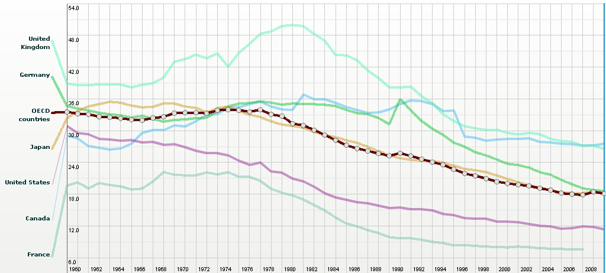
But, for Republicans, it's just a coincidence that when workers have a weaker voice they tend to see a weaker paycheck.
Move along, nothing to see here.
As E.J. Dionne laments, "And the events of recent weeks suggest that if progressives do not speak out plainly on behalf of government, they will be disadvantaged throughout the election-year debate. Gov. Scott Walker’s victory in the Wisconsin recall election owed to many factors, including his overwhelming financial edge. But he was also helped by the continuing power of the conservative anti-government idea in our discourse."
Dionne adds, "One of the reasons I wrote my book “Our Divided Political Heart” was to show that, from Alexander Hamilton and Henry Clay forward, farsighted American leaders understood that action by the federal government was essential to ensuring the country’s prosperity, developing our economy, promoting the arts and sciences and building large projects: the roads and canals, and later, under Abraham Lincoln, the institutions of higher learning, that bound a growing nation together...permitting federal action to serve the common good. A belief in government’s constructive capacities is not some recent ultra-liberal invention."
But why stop going to the well if it hasn't run dry? Thus, Republicans continue their Phony War On Public Employees. Yet, as John Perr finds, "Over 44% of federal employees have a college degree, compared to about 19% of private sector workers. More importantly, an assessment of salaries (excluding benefits) by the Office of Personnel Management found that on average comparable federal civilian workers are paid 22 percent less than private workers. The disparities, even including incentive pay, are even greater in some metropolitan areas."

Ben Polak and Peter Schott explain, "There is something historically different about this recession and its aftermath: in the past, local government employment has been almost recession-proof. This time it’s not. Going back as long as the data have been collected (1955), with the one exception of the 1981 recession, local government employment continued to grow almost every month regardless of what the economy threw at it. But since the latest recession began, local government employment has fallen by 3 percent, and is still falling. In the equivalent period following the 1990 and 2001 recessions, local government employment grew 7.7 and 5.2 percent. Even following the 1981 recession, by this stage local government employment was up by 1.4 percent...Without this hidden austerity program, the economy would look very different. If state and local governments had followed the pattern of the previous two recessions, they would have added 1.4 million to 1.9 million jobs and overall unemployment would be 7.0 to 7.3 percent instead of 8.2 percent."

Zaid Jilani recounts, "Strong unions have traditionally been the free-market solution to income inequality, allowing people to get higher salaries without government intervention. Unionization has allowed middle class and working-class Americans to have the ability to bargain for stronger wages and benefits and a larger share of national income. Highly-unionized countries tend to have far less income inequality."

One of the few economists, before the last bubble burst, to warn that the economy was a house of cards, Nouriel Roubini commented on the detrimental outcomes from undervaluing labor, "Karl Marx had it right. At some point, capitalism can destroy itself. You cannot keep on shifting income from labor to capital without having an excess capacity and a lack of aggregate demand. That's what has happened. We thought that markets worked. They're not working. The individual can be rational. The firm, to survive and thrive, can push labor costs more and more down, but labor costs are someone else's income and consumption. That's why it's a self-destructive process."
Lee Sustar points to research from David Rosenburg which found, "The 'labor share of national income has fallen to its lower level in modern history,' 57.5 percent in the first quarter of 2011, compared to 59.8 percent when the recovery began. While that might seem like a small change, given the $14.66 trillion size of the U.S. economy, it's huge."
Paul Krugman observes, "We haven’t seen spending cuts like this since the demobilization that followed the Korean War."

Let's simply look at the promises of Republican doctrine contrasted with their actual results.
"Like Ronald Reagan, President Bush began his term in office with big tax cuts for the rich and promises that the benefits would trickle down to the middle class. Like Reagan, he also began his term with an economic slump, then claimed that the recovery from that slump proved the success of his policies. And like Reaganomics — but more quickly — Bushonomics has ended in grief. The public mood today is as grim as it was in 1992. Wages are lagging behind inflation. Employment growth in the Bush years has been pathetic compared with job creation in the Clinton era. Even if we don’t have a formal recession — and the odds now are that we will — the optimism of the 1990s has evaporated. This is, in short, a time when progressives ought to be driving home the idea that the right’s ideas don’t work, and never have," declares Krugman.
So, to recap, we're blaming the wrong people (government, public workers) for the wrong things (recession, bailouts, debt), while letting the true culprits (financial engineers and their political operatives - primarily Republicans) responsible for our recurring bubbles and economic calamities off the hook. Our conservative leaders also want us to double-down on the same policies that got us into this mess - tax cuts and deregulation. And, while we're at it, let's elect more jokers, like Scott Walker and Mitt Romney, to keep pushing the same hollow policies.
What's the matter with America?
Subscribe to:
Posts (Atom)